
Carpet makes a room feel warm and cozy. It also holds on to everything: dust, crumbs, pet hair, muddy footprints and the occasional spilled coffee. The good news? You don’t need expensive machines or harsh chemicals to keep it fresh. With a few things you already have at home, like dish soap, white vinegar and baking soda, you can handle most carpet messes yourself.
In this guide, you’ll learn exactly how to clean a carpet, step by step. We’ll start with everyday habits that stop dirt from building up, then move on to spot cleaning, removing common stains, deep cleaning, eliminating odors, and drying your carpet properly. You’ll also learn the mistakes that cause the most damage, so you can avoid them from day one.
Whether you’re dealing with a fresh spill or a carpet that looks tired, these DIY carpet cleaning tips will help you get the job done without wasting time or money. If your carpet needs replacing or professional fitting, Carpet Installation in Dubai can also help you achieve a fresh, clean, and comfortable look for your space.
What You’ll Need for DIY Carpet Cleaning
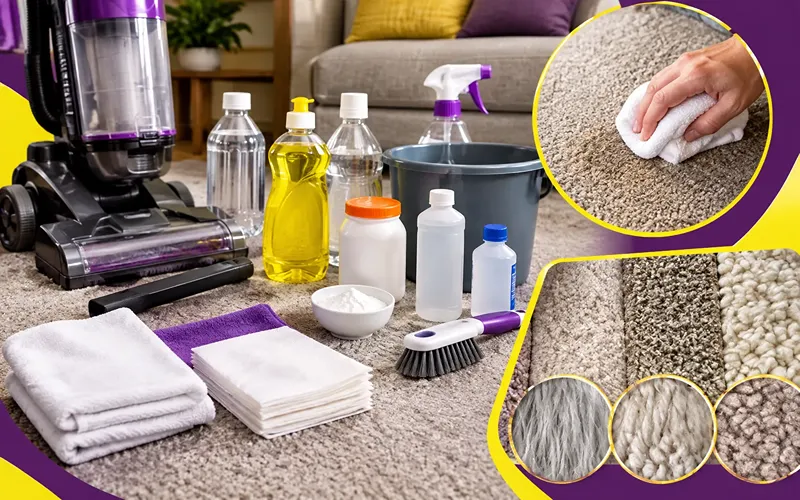
Most of these supplies are already in your kitchen or cleaning cupboard:
- A vacuum cleaner with a brush roll, plus a crevice tool
- White cloths, microfiber towels or paper towels
- Clear dish soap (no dyes or added moisturizers)
- Distilled white vinegar
- Baking soda and cornstarch
- 3% hydrogen peroxide (for light-colored carpets only)
- Rubbing alcohol
- An empty spray bottle, a bucket and a soft-bristled brush
Stick to white or light cloths. Colored towels can transfer dye onto damp carpet.
Always Do a Patch Test First
Before using any homemade carpet cleaner, test it on a hidden spot, like inside a closet or under the sofa. Apply a little, wait 10 minutes, then blot with a white cloth. If color comes off or the fibers change texture, don’t use it.
It also helps to know your carpet’s fiber. Vinegar works well on most synthetic carpets (nylon, polyester and olefin). Wool, silk and handmade rugs are more delicate, so skip acidic or bleaching cleaners on those.
Step 1: Vacuum Regularly
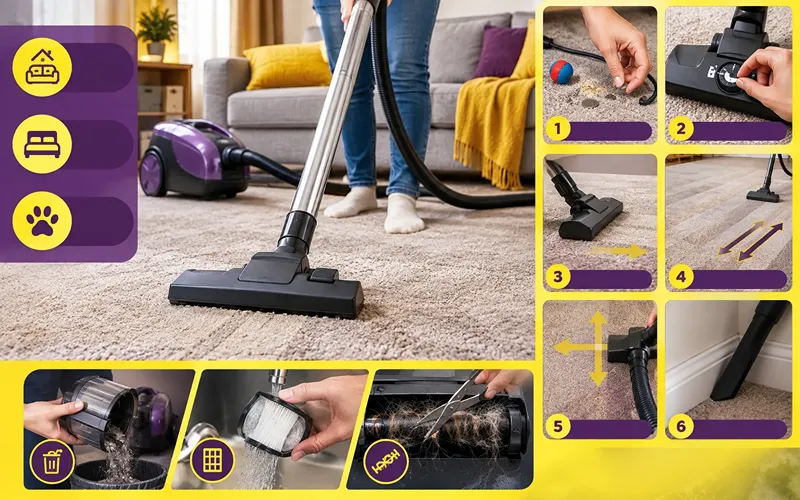
Vacuuming is the most important part of learning how to clean a carpet. Grit settles deep in the fibers, and every footstep grinds it in like sandpaper. Regular vacuuming removes that grit before it wears the carpet down, and it makes every other cleaning job easier.
How Often Should You Vacuum?
- High-traffic areas (hallways, entryways, living rooms): at least twice a week
- Bedrooms and quiet rooms: once a week
- Homes with pets or allergies: daily or every other day in busy areas
How to Vacuum Carpet the Right Way
- Pick up toys, cords and coins that could clog the vacuum.
- Set the height to suit your carpet. Too low and the vacuum drags; too high and the brush barely touches the fibers.
- Move slowly. A slow pass gives the brush time to loosen dirt and the suction time to pull it out.
- Make two or three overlapping passes over each area. More than that adds very little.
- Change direction. Vacuum one way across the room, then at a right angle, to lift the pile and reach dirt from every side.
- Use the crevice tool along baseboards, corners and furniture edges, where dust collects.
Keep Your Vacuum Working Well
A weak vacuum leaves dirt behind. Empty the bin or change the bag when it’s about two-thirds full. Clean or replace the filter as the manual suggests, and cut away hair wrapped around the brush roll.
Step 2: Spot Clean Spills Right Away
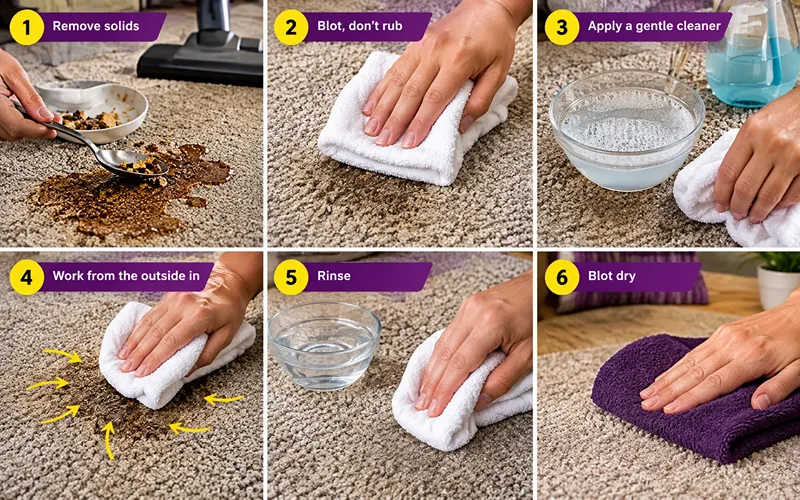
Fresh spills are far easier to remove than old stains. The faster you act, the less time the spill has to soak into the fibers and the padding underneath.
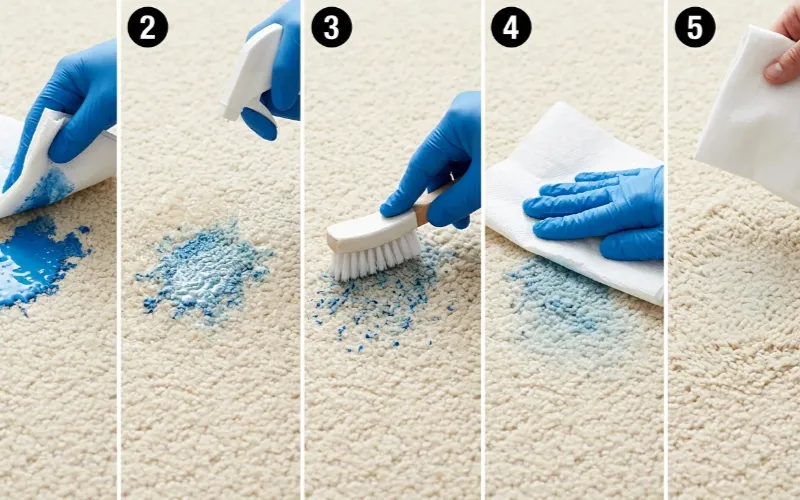
Basic Spot Cleaning Method
- Remove solids. Scoop up anything solid with a spoon. If the mess is dry, like soil or coffee grounds, vacuum it before adding any liquid.
- Blot, don’t rub. Press a clean white cloth onto the spill to soak up as much as possible. Rubbing spreads the stain and frays the fibers.
- Apply a gentle cleaner. Mix 1/4 teaspoon of clear dish soap with 1 cup of warm water. Dampen a cloth and dab the spot rather than pouring the solution on.
- Work from the outside in. This stops the stain from spreading into a bigger ring.
- Rinse. Dab with a cloth dipped in plain water. Leftover soap attracts dirt and can create a new dark spot.
- Blot dry. Lay a dry towel over the area and press down with your hand or a heavy book. Repeat until no more moisture comes up.
Step 3: How to Remove Common Carpet Stains
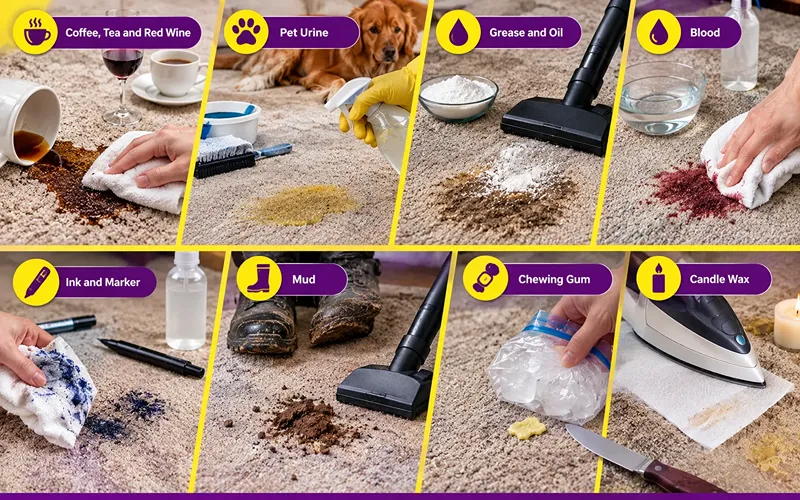
Different stains need different treatments. Here are simple recipes for the messes that come up most often. Test each one first.
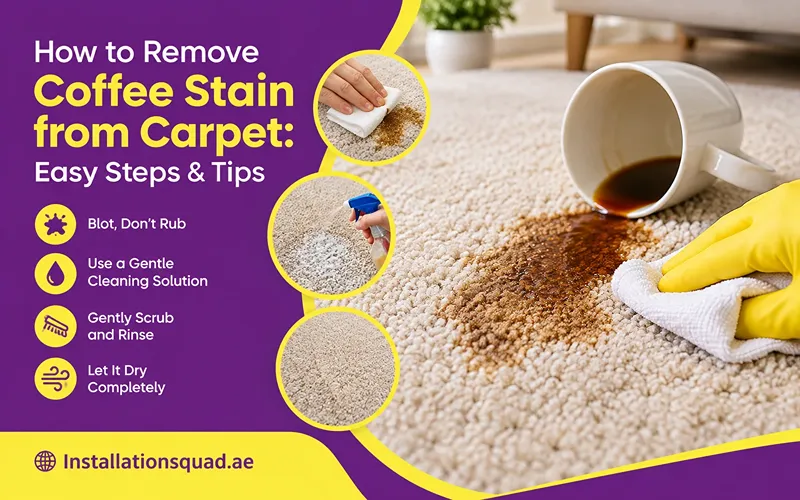
Coffee, Tea and Red Wine
- Blot up as much liquid as you can.
- Mix 1 tablespoon of dish soap, 1 tablespoon of white vinegar and 2 cups of warm water.
- Dab it on, wait 5 minutes, then blot. Repeat until no more color transfers to the cloth.
- Rinse with cold water and blot dry.
For a stubborn mark on a light carpet, dab on a little 3% hydrogen peroxide, wait 10 minutes, then rinse and blot. Avoid peroxide on dark carpets, as it can lighten the color.
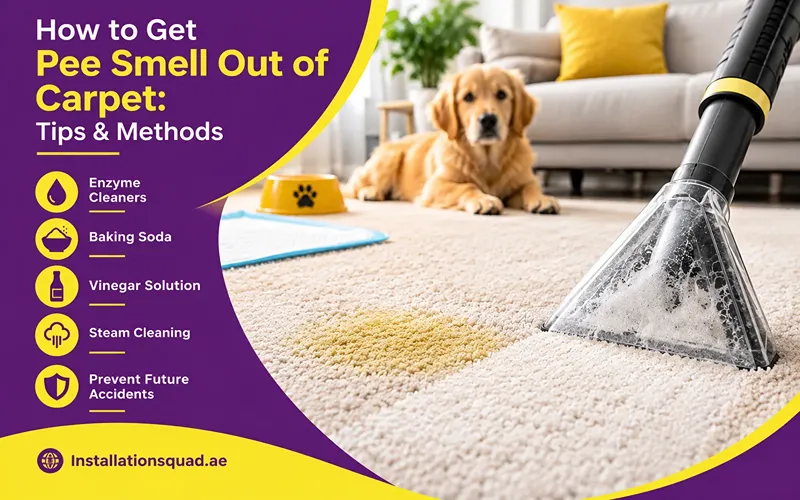
Pet Urine
- Blot firmly with paper towels until they come up almost dry.
- Spray with a 1:1 mix of white vinegar and water. Wait 10 minutes, then blot.
- Once the spot is nearly dry, sprinkle on baking soda, let it sit until fully dry, then vacuum.
- For old or repeat accidents, use an enzymatic cleaner. It breaks down the compounds that cause lasting odor and draw pets back to the same spot.
Grease and Oil
- Cover the spot with cornstarch or baking soda and leave it for 15 to 30 minutes to absorb the oil.
- Vacuum it up.
- Treat any leftover mark with the dish soap solution, then rinse and blot.
Blood
- Use cold water only. Hot water can set protein stains permanently.
- Blot with cold water, then apply the dish soap solution.
- On light carpets, a small amount of hydrogen peroxide can lift the last traces.
Ink and Marker
- Put rubbing alcohol on a white cloth, not straight onto the carpet.
- Dab the ink gently and switch to a clean part of the cloth as the ink transfers.
- Finish with the dish soap solution, then rinse and blot.
Mud
- Let it dry completely. Wet mud only smears.
- Break up the dried mud and vacuum thoroughly.
- Treat any mark that’s left with the dish soap solution.
Chewing Gum and Candle Wax
- Gum: Hold a bagged ice cube on it until it hardens, then scrape it off with a dull knife.
- Wax: Scrape away what you can. Lay a paper towel over the spot and press with a warm iron on a low setting for a few seconds. The wax melts into the paper. Move to a clean section and repeat.
Step 4: How to Deep Clean Carpet at Home
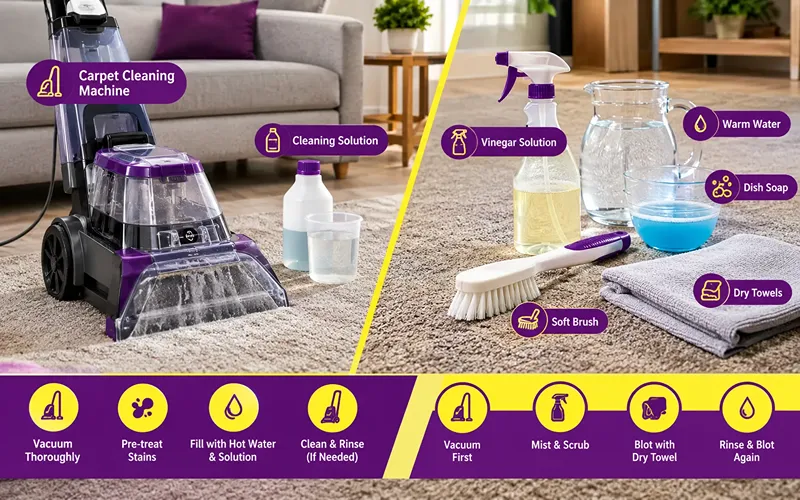
Even with regular vacuuming, dirt builds up deep in the pile. A deep clean every 12 to 18 months restores color and removes buried grime. With pets, kids or allergies, aim for every 6 to 12 months. Some carpet warranties also require periodic professional cleaning, so check yours.
Option 1: Use a Carpet Cleaning Machine
You can rent one from a hardware store or buy your own if spills are frequent.
- Move furniture out, or at least to one side of the room.
- Vacuum thoroughly. Carpet cleaners aren’t built to pick up loose dirt.
- Pre-treat stains and traffic lanes using the methods above. Let the solution sit for about 10 minutes.
- Fill the tank with hot tap water and the cleaning solution recommended for your machine. Use less than the maximum; too much soap leaves a sticky residue.
- Start in the corner farthest from the door so you never walk on clean, wet carpet.
- Make one slow pass while spraying, then one or two dry passes without spraying to pull up water.
- If your machine has a rinse setting, finish with a pass of plain water to remove leftover soap.
Many people add white vinegar to the tank. Check your manual first, as some manufacturers advise against it.
Option 2: Deep Clean by Hand
No machine? You can still deep clean a small room or rug.
- Vacuum the area well.
- Fill a spray bottle with 1 part white vinegar, 2 parts warm water and a few drops of dish soap (synthetic carpets only).
- Work in small sections, about 3 feet square. Mist lightly, then scrub gently with a soft brush.
- Blot each section with a dry towel to lift the dirt.
- Mist with plain water to rinse, and blot again.
Keep it light. The goal is to clean the fibers, not soak the padding underneath.
Step 5: How to Eliminate Carpet Odors
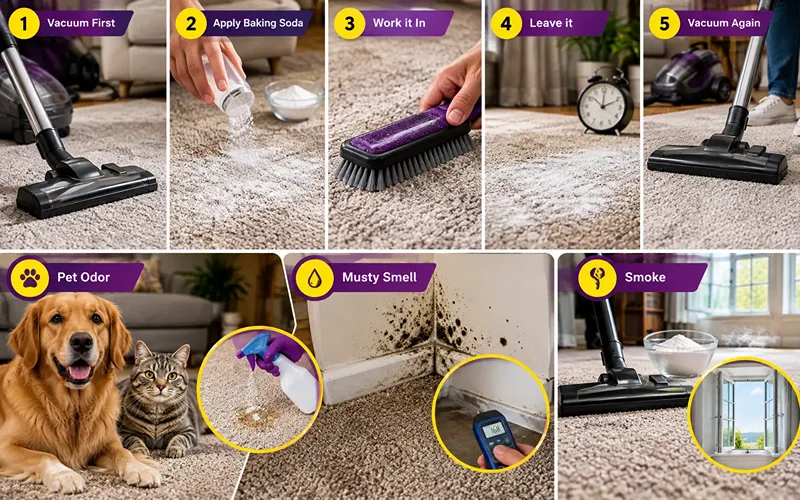
Baking soda is the easiest DIY carpet deodorizer. It absorbs smells instead of covering them up.
Baking Soda Deodorizing Method
- Vacuum the carpet first.
- Sprinkle a light, even layer of baking soda across the area.
- Work it into the fibers with a soft brush or broom.
- Leave it for at least 30 minutes, or overnight for strong smells. Keep pets and kids out of the room.
- Vacuum slowly with several passes. Then empty the bin and check the filter, since fine powder can clog it.
When the Smell Keeps Coming Back
- Pet odor: Urine has probably reached the padding. Use an enzymatic cleaner and follow the label so it soaks as deep as the urine did.
- Musty smell: This usually means moisture. Look for leaks, damp floors or poor airflow. If you spot mold, call a professional.
- Smoke: Expect to repeat the baking soda treatment and a deep clean, with plenty of fresh air.
If you have pets, skip essential oils. Some are toxic to cats and dogs, even in small amounts.
Step 6: How to Dry Your Carpet Properly
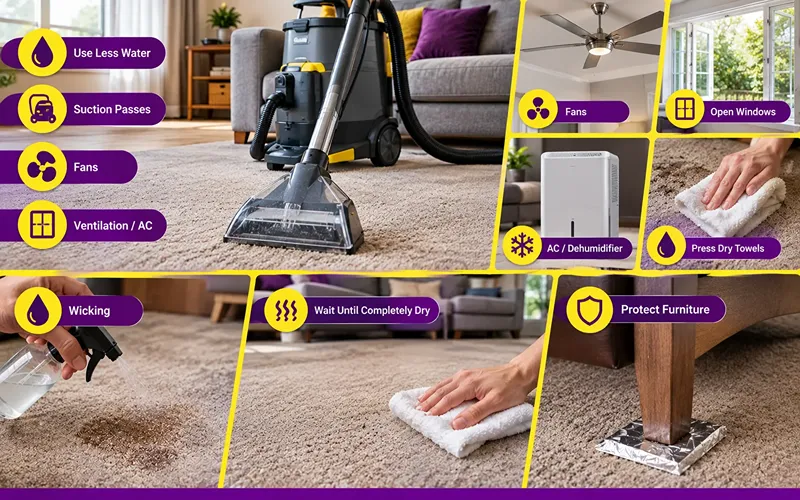
Drying is the step people rush most, and it’s where problems start. Carpet that stays wet too long can develop mildew, musty smells and brown marks. Mold can start growing within 24 to 48 hours.
Most carpets dry in 6 to 12 hours after a deep clean. Humidity, carpet thickness and how much water you used all affect the time.
How to Dry Carpet Fast
- Use as little water as possible from the start.
- Make extra suction-only passes with your machine.
- Run ceiling fans or point box fans across the carpet.
- Open windows if the air outside is dry. In humid weather, run the AC or a dehumidifier instead.
- Press dry towels onto any damp patches.
After the Carpet Dries
If a stain reappears as the carpet dries, residue deep in the fibers has risen to the surface. This is called wicking. Blot the spot with plain water and dry it again.
Wait until the carpet is completely dry before moving furniture back. If you can’t wait, put foil squares or plastic tabs under the legs to stop wood stain or rust from marking the carpet.
Common Carpet Cleaning Mistakes to Avoid
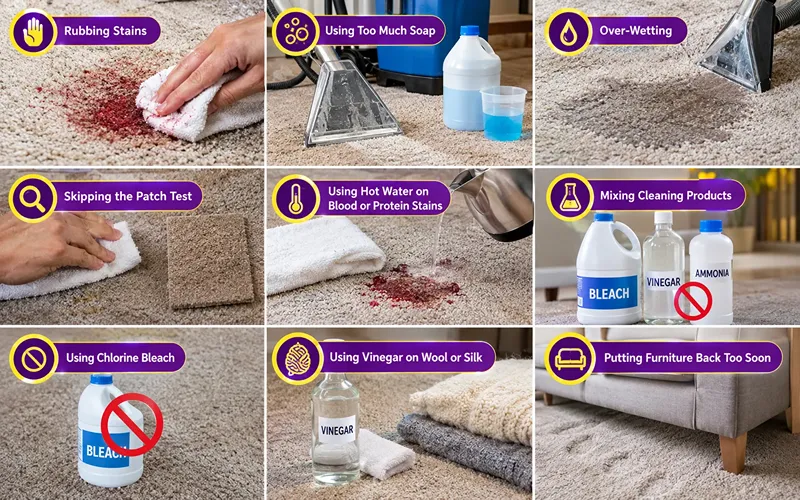
- Rubbing stains. It pushes the stain deeper and damages the fibers. Always blot.
- Using too much soap. Leftover residue attracts dirt, so the carpet gets dirty faster.
- Over-wetting. Soaked padding is slow to dry and invites mildew.
- Skipping the patch test. One hidden test can save your whole carpet.
- Using hot water on blood or other protein stains. Heat sets them.
- Mixing cleaning products. Never mix bleach with vinegar or ammonia, as this creates toxic fumes. Don’t store vinegar and hydrogen peroxide mixed in one bottle either.
- Using chlorine bleach. It strips carpet dye and leaves permanent pale spots.
- Using vinegar on wool or silk. Its acidity can damage natural fibers.
- Putting furniture back too soon. It can leave marks and trap moisture.
Conclusion
Knowing how to clean a carpet comes down to a simple routine. Vacuum often, treat spills right away, deep clean once a year or so, and always dry the carpet completely.
Household staples like dish soap, white vinegar and baking soda handle most messes. Just remember to test first, blot instead of rubbing, and use less liquid than you think you need.
Start with the habit that matters most: regular vacuuming. Everything else gets easier, and your carpet will look better, smell fresher and last longer.
Frequently Asked Questions
How often should I clean my carpet?
Vacuum busy areas twice a week and the rest weekly. Deep clean every 12 to 18 months, or every 6 to 12 months if you have pets, kids or allergies.
Can I clean carpet with just vinegar and water?
Yes, on synthetic carpets. A 1:1 mix of white vinegar and water works well for light stains and freshening up. The vinegar smell fades as the carpet dries.
Does baking soda damage carpet?
No, but vacuum it up thoroughly. Leftover powder can dull the carpet, and too much at once can strain your vacuum’s filter.