
Slime is great fun until a blob lands on the floor and gets pressed deep into the carpet. If you’re wondering how to get slime out of carpet, the good news is that most slime messes can be removed at home with simple supplies: a spoon, white vinegar, warm water, dish soap and a few clean towels. The key is using the right method for the mess in front of you. Fresh, gooey slime needs to be lifted before it spreads, while dried slime needs to be softened before it lets go of the fibers. Proper care can also help protect the carpet’s appearance and condition after carpet installation.
This guide walks you through both situations step by step. It also explains how to deal with leftover color or sticky residue, which mistakes make slime stains worse, and when it’s worth calling in a professional.
Why Slime Sticks So Stubbornly to Carpet
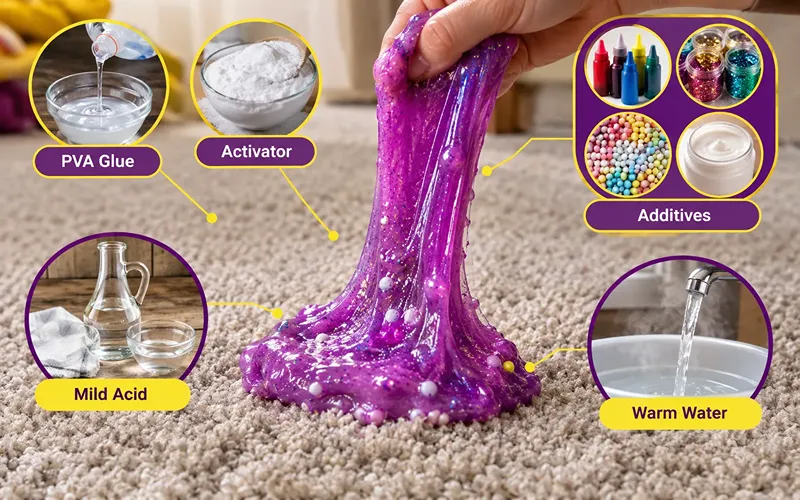
Most slime is made from PVA glue mixed with an “activator” such as borax, contact lens solution or liquid starch. The activator links the long glue molecules together, creating a stretchy, rubbery material that wraps itself around carpet fibers. Many slimes also contain food coloring, paint, glitter, foam beads or lotion, and each of these adds its own cleaning challenge.
Two things work in your favor. First, the bonds that hold slime together are weakened by mild acid, which is why white vinegar works so well: it loosens the slime so it stops behaving like glue. Second, PVA glue is water-based, so it softens with warm water and a little patience. In most cases, you don’t need anything harsh.
Supplies You’ll Need
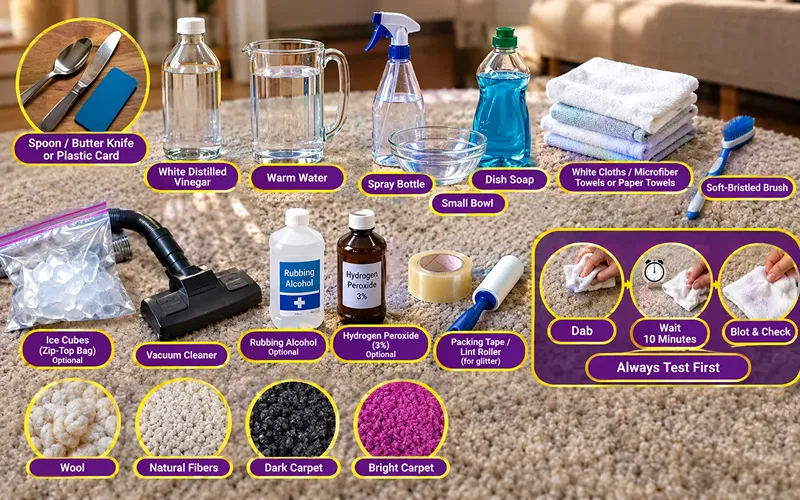
You won’t need every item for every mess, but having these ready will save time:
- Spoon, butter knife or old plastic card to lift slime without cutting fibers
- White distilled vinegar, the main slime-loosening ingredient
- Warm water (warm, not hot)
- Spray bottle and a small bowl
- Clear liquid dish soap for sticky or greasy residue (clear soap avoids adding new dye)
- Clean white cloths, microfiber towels or paper towels so you can see color lifting and avoid dye transfer
- Soft-bristled brush, such as an old toothbrush
- Ice cubes in a zip-top bag (optional, for very gooey slime)
- Vacuum cleaner
- Rubbing alcohol (optional, for stubborn sticky residue)
- 3% hydrogen peroxide (optional, for color stains on light, synthetic carpet only)
- Packing tape or a lint roller for glitter
Always Test First
Before using any cleaning solution, test it on a hidden spot, such as inside a closet or under a sofa. Dab a little on, wait 10 minutes, then blot with a white cloth. If color comes off on the cloth or the fibers feel different, stop and stick with plain warm water, or get professional advice. This step matters most with wool, natural fibers and dark or brightly colored carpet.
How to Get Slime Out of Carpet When It’s Still Fresh
Fresh slime is the easiest to deal with, so act as soon as you can.
Step 1: Lift Off as Much as Possible
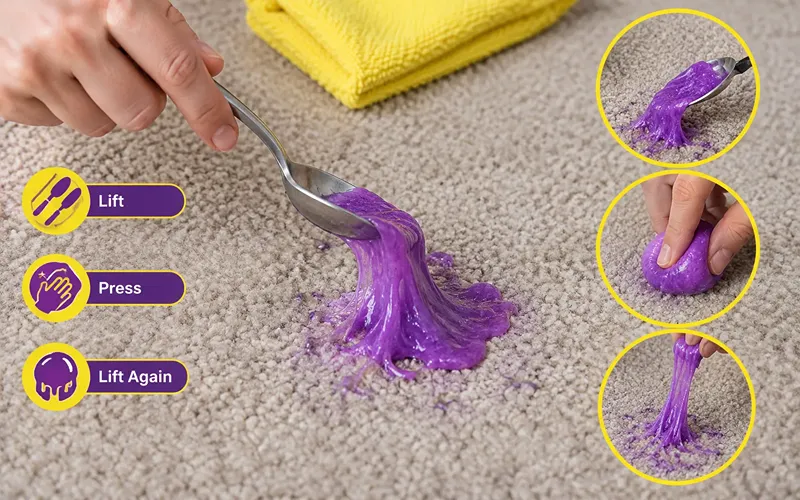
Resist the urge to wipe it with a towel, which only spreads the mess. Instead, use a spoon or dull knife to scoop the slime up, working from the outer edge toward the center so you don’t push it into clean carpet. Fresh slime often comes away in stretchy pieces, so pull slowly. A handy trick is to press a clean ball of the same slime onto the spot and lift; slime sticks to slime and can pick up smaller bits.
Step 2: Firm Up Very Sticky Slime (Optional)
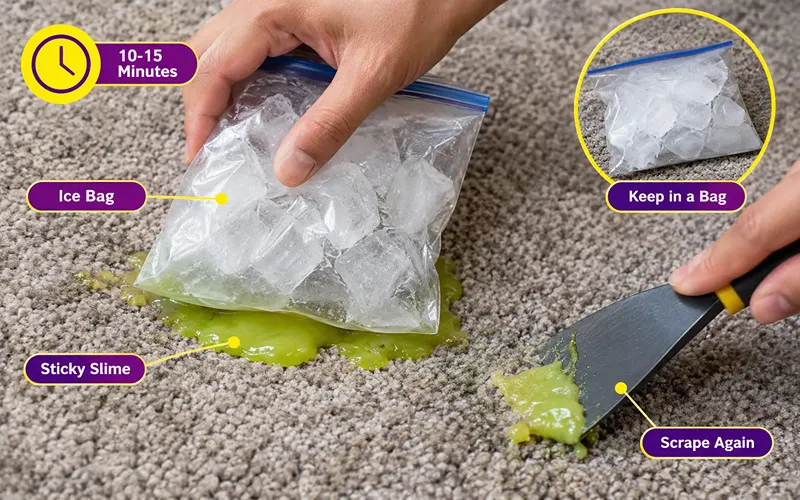
If the slime is too runny or sticky to scoop, hold a bag of ice on it for 10-15 minutes. The cold makes it firmer and less tacky, so it breaks away from the fibers more cleanly. Keep the ice in a bag so meltwater doesn’t soak the carpet, then scrape again.
Step 3: Apply a Vinegar Solution

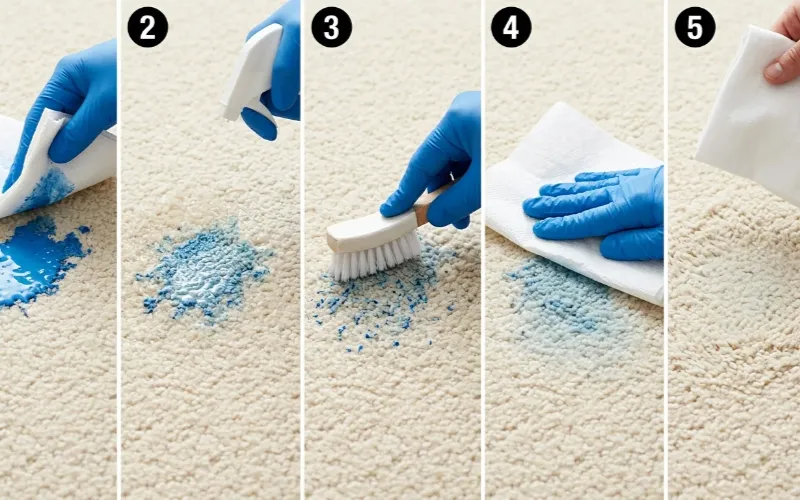
Mix equal parts white vinegar and warm water in a spray bottle. Mist the area until it is damp, not soaked, and let it sit for 5-10 minutes so the vinegar can loosen the remaining slime.
Step 4: Loosen and Blot
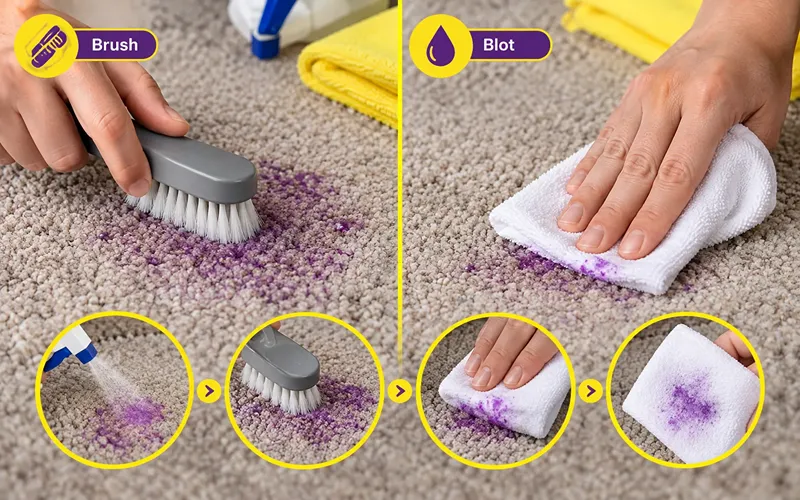
Gently work the area with a soft brush using short strokes, lifting the fibers rather than grinding down into them. Then blot with a white cloth: press down, lift, and move to a clean part of the cloth. Repeat the spray, wait and blot cycle until nothing more transfers to the cloth.
Step 5: Rinse the Area
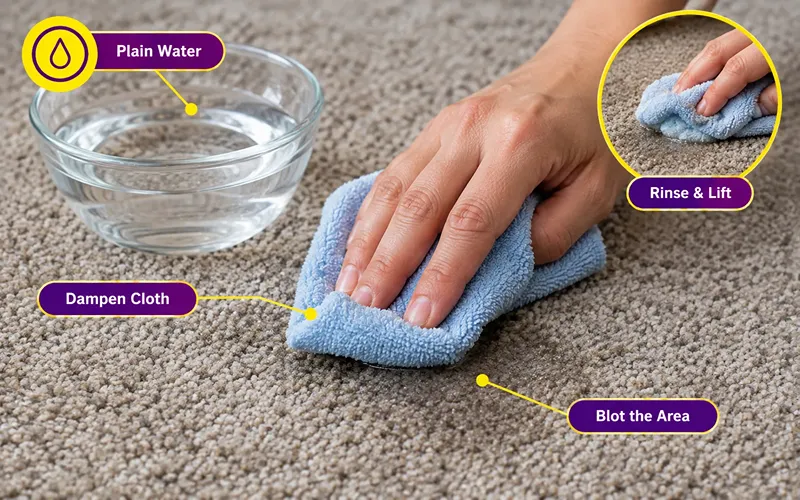
Leftover vinegar and dissolved glue can leave the fibers stiff and attract dirt. Dampen a clean cloth with plain water and blot the spot a couple of times to rinse it.
Step 6: Dry Thoroughly
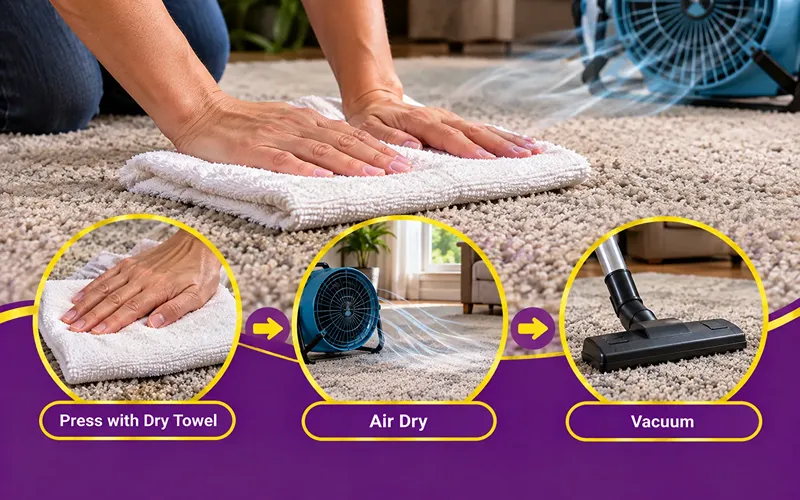
Press a dry towel firmly onto the area; standing on it helps. Let the carpet air dry, using a fan or open window to speed things up. Once it’s completely dry, vacuum to lift the pile back up.
How to Remove Dried Slime from Carpet
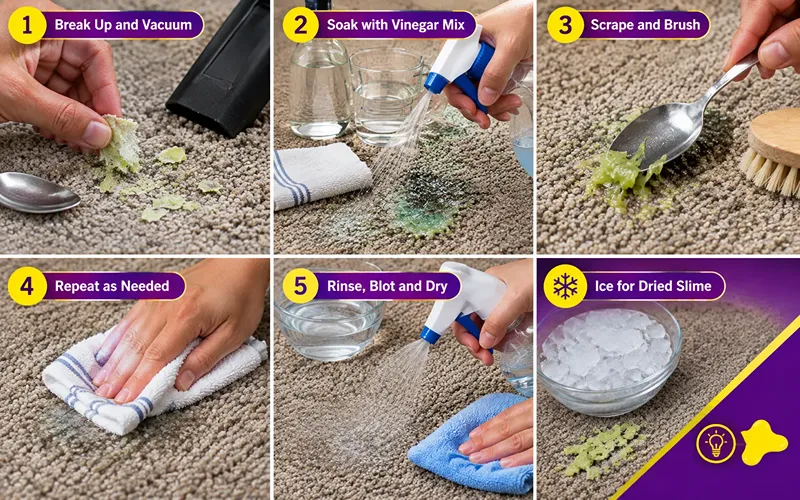
Dried slime takes more patience, but it’s rarely a lost cause. The goal is to rehydrate the slime so it softens enough to release the fibers.
Step 1: Break Up and Vacuum Loose Pieces
If the slime has dried into a crust, gently break off the brittle parts with your fingers or the edge of a spoon. Vacuum up the loose flakes. This is fine for dry slime, but never vacuum wet or gooey slime.
Step 2: Soak with a Stronger Vinegar Mix
For dried slime, use two parts white vinegar to one part warm water. Apply it directly to the slime with a spray bottle or a soaked cloth, focusing on the slime rather than soaking the whole area. Leave it for 10–15 minutes. For a thick spot, lay a vinegar-dampened cloth over it so it stays moist while it works.
Step 3: Scrape and Brush
As the slime softens, scrape away what you can with a spoon, then use a soft brush to tease the rest out of the fibers. Brush in one direction, then the other, keeping your strokes gentle.
Step 4: Repeat as Needed
Older or larger spots may need three or four rounds. Several gentle soak-and-scrape cycles work much better than scrubbing harder, which can damage the carpet.
Step 5: Rinse, Blot and Dry
Finish just as you would for fresh slime: rinse with plain water, blot firmly, let it air dry and vacuum.
A Note on Using Ice for Dried Slime
Ice is useful for soft, gooey slime, but once slime has dried hard, freezing it doesn’t add much and simply introduces more water. Save the ice method for fresh messes and use vinegar to soften dried ones.
What to Do If Slime Leaves a Stain or Residue
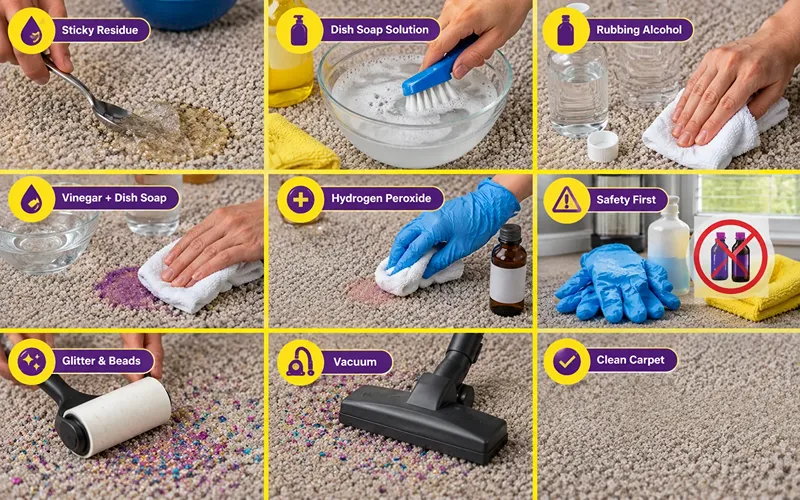
Once the slime itself is gone, you may still see one of two problems: a sticky or stiff patch, or a colored stain. Treat them separately.
Sticky or Stiff Residue
Mix one teaspoon of clear dish soap into two cups of warm water. Apply it to the spot, let it sit for a few minutes, then blot. Rinse well with plain water afterward, because soap left in carpet attracts dirt and can make the spot look gray over time.
If the area still feels tacky, dab a small amount of rubbing alcohol onto a white cloth (don’t pour it onto the carpet) and press it onto the residue for a minute or two, then blot. Rubbing alcohol can break down glue that water leaves behind. Test it first, since it can affect some dyes, and use it in a well-ventilated room away from open flames because it’s flammable.
Color Stains from Food Coloring or Paint
Colored slime can leave a dye stain, even after the slime is gone. Start with a gentle mix of one tablespoon white vinegar, one teaspoon clear dish soap and two cups of warm water. Blot repeatedly, switching to a fresh section of cloth each time so you’re lifting color, not moving it around.
If a faint stain remains on light-colored, synthetic carpet (such as nylon or polyester), 3% hydrogen peroxide can help lighten it. Test it on a hidden spot first, as it can bleach carpet. Apply a small amount with a cloth or cotton swab, leave it for a few minutes, blot, then rinse with water. Don’t use hydrogen peroxide on wool or dark carpet.
A few safety points matter here. Never mix hydrogen peroxide and vinegar in the same container, because together they form peracetic acid, which can irritate the skin, eyes and lungs. If you’ve already used vinegar, rinse the area with water before applying peroxide. Wear gloves, open a window, and keep children and pets away until the area is rinsed and dry. A store-bought, oxygen-based carpet stain remover is another option; follow the label instructions and test it first.
Glitter, Foam Beads and Other Add-Ins
Wait until the area is completely dry, then press packing tape or a lint roller over it to pick up glitter and beads. Vacuum afterward. Trying to remove glitter while the carpet is wet tends to spread it further.
Common Mistakes to Avoid
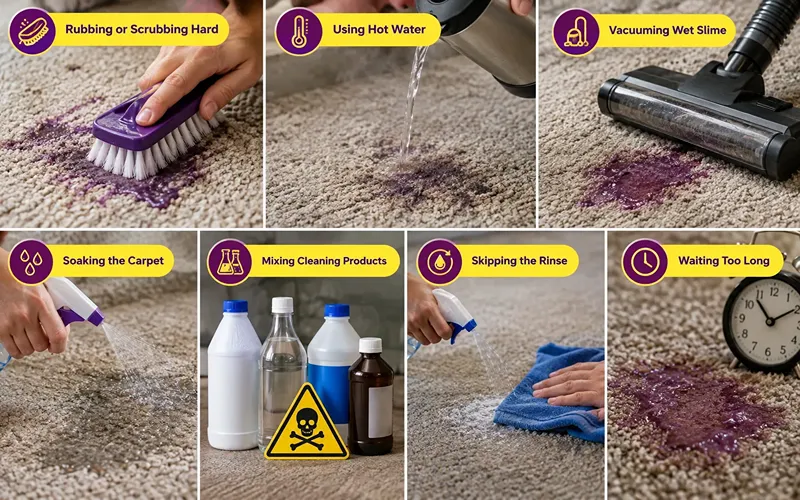
Rubbing or Scrubbing Hard
Aggressive scrubbing pushes slime deeper, spreads the stain and can untwist or fray carpet fibers, leaving a fuzzy patch that looks worse than the original mess. Blot and brush gently instead.
Using Hot Water
Warm water is enough to soften slime. Very hot water can help some dyes set into the fibers and can damage wool carpet.
Vacuuming Wet Slime
Wet slime can clog the brush roll, hose and filters of your vacuum. Only vacuum once the slime has been removed or has dried into flakes.
Soaking the Carpet
Too much liquid seeps into the backing and pad underneath. This can cause musty odors or mildew, and stains can “wick” back up to the surface as the carpet dries. Spray lightly and blot often.
Mixing Cleaning Products
Some combinations create harmful fumes. Bleach mixed with vinegar releases chlorine gas, bleach mixed with ammonia creates toxic chloramine vapors, and peroxide plus vinegar forms peracetic acid. Use one product at a time and rinse between them. Bleach should be avoided on carpet anyway, since it can remove color permanently.
Skipping the Rinse
Leftover vinegar, soap or dissolved glue makes the spot sticky, and sticky spots collect dirt quickly. Always finish with a plain water rinse.
Waiting Too Long
The longer slime sits, the more time dyes have to soak into the fibers. Fresh messes are always easier to remove.
Tips to Protect Carpet Fibers and Avoid Damage

Know your carpet type. Most household carpets are nylon, polyester or olefin, which handle vinegar, mild soap and careful spot-treating well. Wool is more delicate: avoid hydrogen peroxide, strong alkaline cleaners and high heat, and stick to gentle blotting. If you’re unsure, check the carpet label or the manufacturer’s care guide.
Use white cloths only. Colored towels can transfer dye onto damp carpet, especially when used with cleaning solutions.
Choose dull tools. A spoon or plastic card lifts slime without snagging loops or cutting fibers. Avoid sharp knives and scissors unless a tiny, hardened bit is stuck to the very tips of the fibers.
Work from the outside in. This keeps the mess contained instead of spreading it into clean carpet.
Dry the area quickly. Good airflow reduces the risk of odors and wicking. Once dry, gently fluff the pile with your fingers or vacuum it.
Check your carpet warranty. Some manufacturers specify approved cleaning methods, and harsh chemicals could affect your coverage.
Prevent the next mess. Set up slime play at a table on a washable mat or tray, store slime in airtight containers, and keep it out of carpeted rooms when possible.
When to Call a Professional Carpet Cleaner
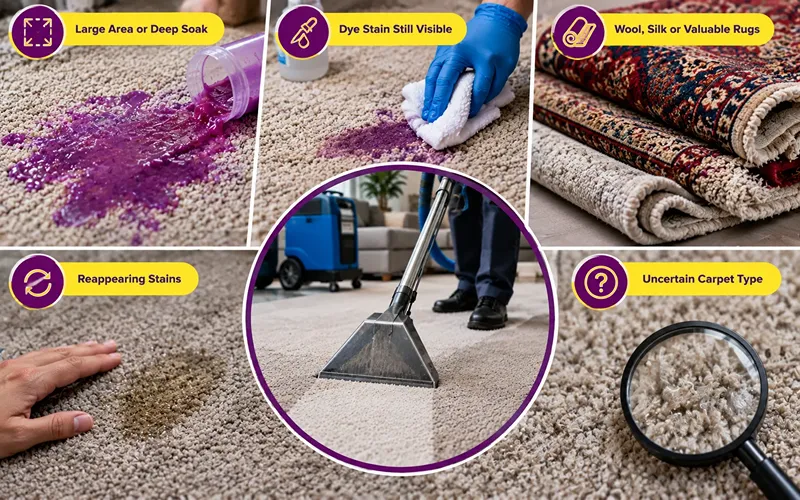
Home methods handle most slime spills, but professional carpet cleaning is worth considering if:
- The slime covers a large area or has soaked in deeply
- A dye stain is still visible after several careful attempts
- The carpet is wool, silk, handmade or an antique or valuable rug
- The stain keeps reappearing after it dries, which can mean residue is trapped in the pad
- You’re unsure what your carpet is made of and don’t want to risk damage
A professional can identify the fiber type, choose the right cleaning solution and use hot water extraction to rinse residue from deep in the pile without overwetting it. Calling early is often cheaper than repairing damage caused by repeated DIY attempts.
Conclusion
Getting slime out of carpet comes down to a simple sequence: lift off as much as you can, loosen what’s left with a vinegar solution, blot instead of scrubbing, rinse, and dry thoroughly. Fresh slime usually comes out in one session, while dried slime just needs more soaking and patience. For leftover residue or color, treat gently, test products first and never mix cleaners. If the stain won’t budge or your carpet is delicate, a professional carpet cleaner can finish the job safely.
Frequently Asked Questions
Does vinegar really get slime out of carpet?
In most cases, yes. The mild acid in white vinegar weakens the bonds that hold slime together, so it loosens its grip on the fibers. It works best combined with scraping and gentle brushing, and dried slime may need several rounds.
How long does it take to remove slime from carpet?
Fresh slime usually takes 15–30 minutes. Dried slime can take up to an hour of soaking and scraping. Allow several more hours for the carpet to dry completely.
Can I use rubbing alcohol on carpet?
Yes, in small amounts for sticky residue. Apply it with a cloth rather than pouring it, test a hidden spot first, and make sure the room is well ventilated.
Will slime permanently stain my carpet?
Clear or lightly colored slime usually comes out completely. Dark dyes, paint-based slime or slime left for a long time on light carpet may leave a faint shadow. Hydrogen peroxide (on suitable carpet) or professional cleaning can often lighten or remove it.
Is removing slime from an area rug any different?
The method is the same, but place a towel under the rug to stop moisture reaching the floor below. Check the care label, since some small rugs are machine washable.
Does the ice method work on all slime?
Ice works best on fresh, gooey slime because it makes it firmer and easier to scrape. It’s much less helpful once slime has dried hard.