You vacuumed yesterday, yet the carpet already has a soft grey haze of fur, especially near the sofa and the spot where your dog likes to nap. If that sounds familiar, you’re in good company. Pet hair is one of the most common cleaning complaints in homes with cats and dogs, and carpet is where it causes the most trouble.
The good news is that you don’t need expensive gear or hours of scrubbing. Most of the work comes down to two things: loosening the hair from the fibres, then lifting it away. Once you understand that, the job gets much faster.
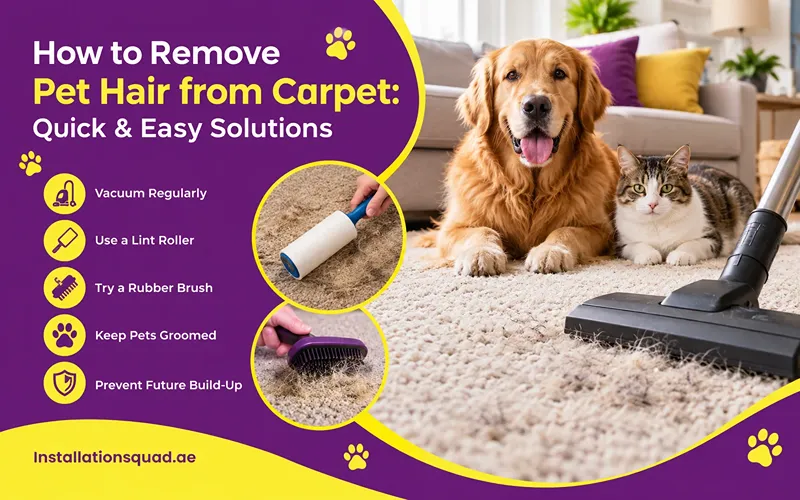
In this guide on how to remove pet hair from carpet, you’ll learn why fur clings so tightly, which tools are worth owning, a simple step-by-step routine, tricks for stubborn and embedded hair, and habits that stop hair from building up in the first place. The methods work for dog hair and cat hair, on wall-to-wall carpet, rugs and stairs, whether you’re maintaining an existing carpet or preparing for professional Carpet Installation.
Why Pet Hair Sticks to Carpet So Stubbornly
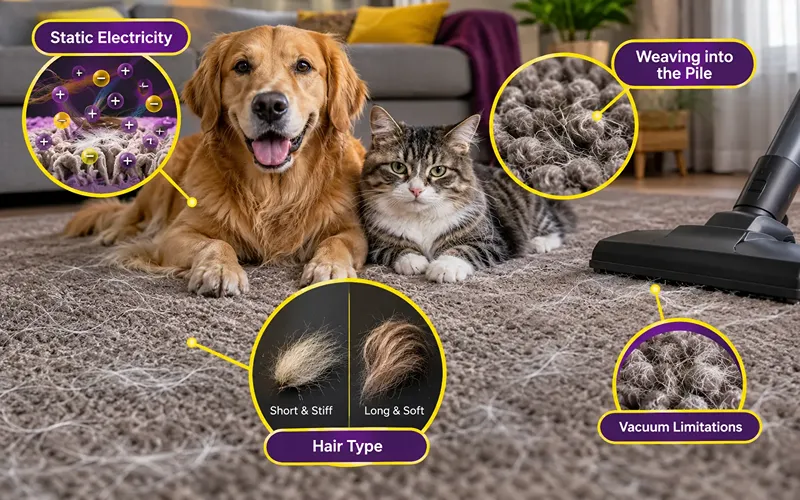
Knowing what holds the hair in place helps you pick the right fix. Three things are usually at work.
Static electricity. Synthetic carpets such as nylon and polyester build up a static charge, especially in dry winter air. Fine fur, like cat undercoat, gets pulled onto the fibres and held there.
Weaving into the pile. Every time someone walks across the room, loose hairs get pressed down between the carpet fibres. Over a few days they twist around the tufts and become much harder to lift than fresh hair sitting on top.
Hair type. Short, stiff hairs (common with breeds like Labradors, Pugs and Dalmatians) act like tiny needles that spear into the carpet. Long, soft hair tends to tangle and clump instead. Both need loosening before a vacuum can grab them.
This is why a quick vacuum often leaves hair behind. The suction removes what sits loosely on the surface, but it can’t always pull out hair that’s woven in or held by static.
Useful Tools for Removing Pet Hair from Carpet
You probably own a few of these already. The rest are cheap and last for years.
| Tool | Best for | Watch out for |
| Rubber gloves (household type) | Small areas, rugs, stairs, corners | Slow for whole rooms |
| Rubber broom | Large rooms, low and medium pile | Less effective on deep shag |
| Carpet rake | Loosening embedded hair before vacuuming | Can fluff up loop and twist piles |
| Window squeegee | Low-pile carpet, car mats, edges | Needs a firm, clean rubber blade |
| Pumice-style pet hair stone | Short, stiff, woven-in hair | Too harsh for wool and delicate rugs; test first |
| Lint roller (wide or long-handled) | Quick touch-ups, under furniture | Sheets run out fast on big areas |
| Vacuum with a rotating brush roll | Main removal, every clean | Hair wraps around the roller over time |
| Handheld or cordless vacuum | Stairs, pet beds, daily top-ups | Smaller bins fill quickly |
What to Look for in a Vacuum for Pet Hair
You don’t need a model labelled “pet” to get good results, but a few features make a real difference:
- A motorised brush roll that agitates the carpet. Suction alone struggles with woven-in fur.
- A tangle-resistant or easy-release roller, so you’re not cutting hair off it every week.
- Adjustable height or suction, so the head sits properly on thick and thin carpets.
- A sealed system with a good filter if anyone in the house has allergies. Pet dander travels with the hair.
- A mini motorised tool for stairs, sofas and pet beds.
Robot vacuums are useful for daily maintenance in homes with heavy shedders. They stop hair from piling up between deeper cleans, but they rarely replace a thorough weekly vacuum on thick carpet.
How to Remove Pet Hair from Carpet: Step-by-Step Methods
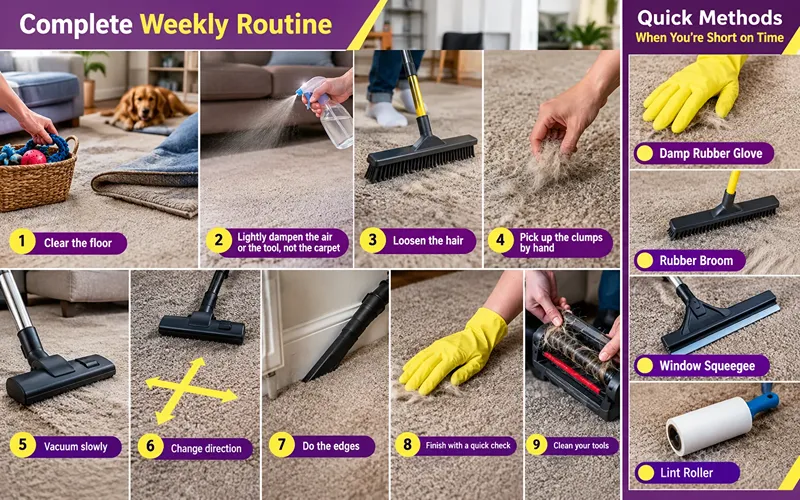
The most reliable approach is a simple loosen, lift and finish routine. Below is the full method for a weekly clean, followed by quick fixes for days when you only have five minutes.
Complete Weekly Routine
- Clear the floor. Pick up toys, pet beds and small rugs. Shake rugs outside so their hair doesn’t land back on the carpet.
- Lightly dampen the air or the tool, not the carpet. In dry weather, a fine mist of plain water over the room (from a distance, so the carpet barely feels cool) reduces static. Never soak the carpet.
- Loosen the hair. Work across the room with a rubber broom or carpet rake using short strokes towards you. Go in one direction first, then across it. The hair will gather into clumps on the surface.
- Pick up the clumps by hand. Collect the larger balls of fur before vacuuming. This stops them clogging the vacuum head or hose.
- Vacuum slowly. Move at about half your normal speed and overlap each pass. Slow passes give the brush roll time to work fur out of the pile.
- Change direction. Vacuum the same area again at a right angle to your first passes. Hair lies in different directions, and a second angle catches what the first missed.
- Do the edges. Use the crevice tool along skirting boards, door thresholds and under radiators, where hair drifts and settles.
- Finish with a quick check. Run a damp rubber glove over the pet’s favourite spots. If it still collects hair, give those areas one more slow pass.
- Clean your tools. Pull hair off the broom, rake and vacuum roller, and empty the bin. A clean brush roll picks up far more next time.
For most homes, this takes 15 to 25 minutes per carpeted room the first time, and less once you keep up with it.
Quick Methods When You’re Short on Time
The Damp Rubber Glove
Put on a household rubber glove, run it under the tap and shake off the excess. Wipe your palm across the carpet in short strokes, always in the same direction. The rubber grips the hair and rolls it into a ball you can pick up and bin. This is ideal for stairs, corners and around furniture legs.
The Rubber Broom
A rubber broom does the same job as the glove but across a whole room while you stand up. Sweep towards yourself with firm, short strokes. It’s often the single most useful tool for anyone learning how to remove pet hair from carpet without buying a new vacuum.
The Window Squeegee
Drag a clean squeegee across low-pile carpet, pulling it towards you. The rubber edge lifts surprising amounts of fur into a line that’s easy to vacuum or pick up. It also works well on car mats.
The Lint Roller
For a fast touch-up before guests arrive, roll a wide or long-handled lint roller over visible patches. It’s not efficient for a whole room, but it’s perfect for a rug, a stair tread or the spot in front of the sofa.
Tips for Stubborn and Embedded Pet Hair
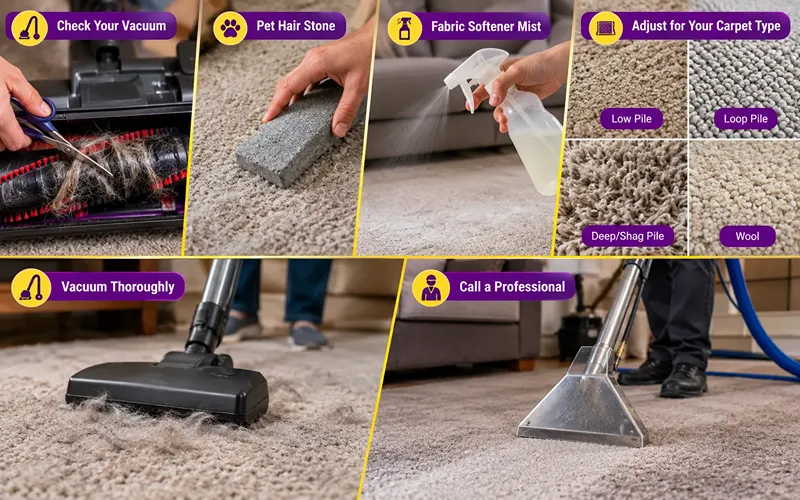
Some hair refuses to budge, especially short, wiry fur that has been walked into the carpet for weeks. These tips help with the toughest cases.
Check Your Vacuum Before Blaming the Carpet
Often the problem isn’t the hair but the machine. Before trying anything else:
- Cut away hair wrapped around the brush roll. A matted roller barely touches the carpet.
- Look for worn or flattened bristles on the roller and replace it if needed.
- Empty the bin or change the bag when it’s two-thirds full, as suction drops sharply after that.
- Check the hose and head for clogs. A ball of fur in the neck of the hose can cut pickup in half.
- Wash or replace the filter according to the manufacturer’s guide.
- Set the correct height for your carpet. If the head floats too high, the brush can’t reach the pile.
Use a Pet Hair Stone on Short, Wiry Fur
A pumice-style pet hair stone grips hairs that rubber tools slide over. Use light strokes in one direction. Test it on a hidden corner first, and avoid it on wool, silk or loop-pile carpet, where it can cause fuzzing.
Try a Diluted Fabric Softener Mist
For carpets where static is the main problem, mix a small amount of liquid fabric softener with plenty of water in a spray bottle. Mist the area very lightly, wait until it is fully dry, then brush and vacuum. Always spot-test first. Use this occasionally, not every week, because softener residue can attract dirt over time. Skip it on wool carpets unless the manufacturer says it’s safe.
Adjust for Your Carpet Type
- Low pile and berber-style synthetics: Rubber brooms and squeegees work brilliantly here.
- Loop pile: Avoid stiff brushes, rakes and pet hair stones, which can snag or fluff the loops. Stick to rubber tools and a vacuum with the brush roll set high or switched off if your manual advises it.
- Deep or shag pile: Use a carpet rake, then vacuum slowly in several directions. Hair sinks deep, so patience matters more than force.
- Wool: Be gentle. Use rubber tools and a good vacuum, and avoid harsh chemicals and abrasive stones.
If you’re unsure, check the care guide from your carpet’s maker or retailer.
Vacuum Thoroughly Before Any Deep Clean
If you shampoo or steam clean your carpet, remove as much hair as you can first. Wet fur clumps together and can be pushed deeper into the backing. A thorough dry clean beforehand gives a much better result.
Know When to Call a Professional
If hair is matted deep into an older carpet, or the carpet also needs odour or stain treatment, a professional clean can reset it. After that, regular maintenance is far easier.
How to Prevent Pet Hair Buildup on Carpet
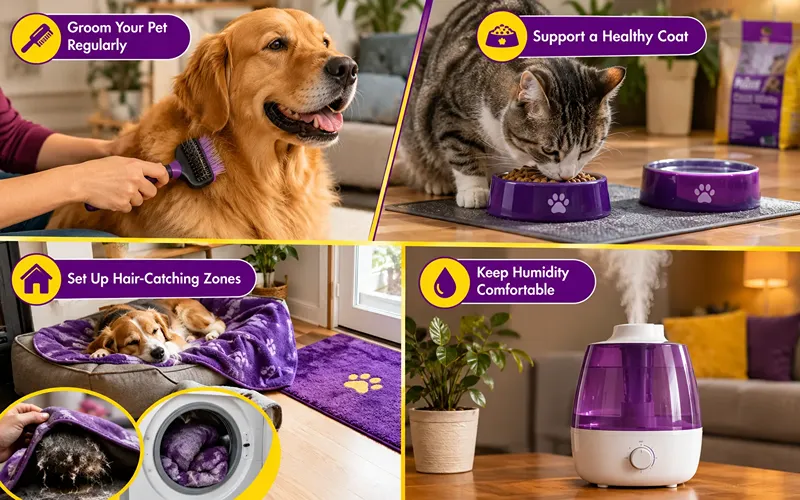
The easiest hair to clean is the hair that never reaches the floor. These habits cut down the work a lot.
Groom Your Pet Regularly
Brushing removes loose fur before it falls out around the house. Short-coated pets usually need a brush once or twice a week. Double-coated breeds, such as Huskies, German Shepherds and long-haired cats, often need brushing several times a week, and daily during seasonal shedding in spring and autumn. Brush outdoors or on a hard floor where hair is easy to sweep up. Ask your vet or groomer which brush suits your pet’s coat.
Support a Healthy Coat
A balanced diet and fresh water help keep skin and coat in good condition. If shedding suddenly increases or you notice bald patches or itching, check with your vet, as it can point to allergies, parasites or other health issues.
Set Up Hair-Catching Zones
- Put washable rugs or mats where your pet sleeps, eats and enters the house. These trap hair before it spreads.
- Cover your pet’s favourite spot on the carpet with a washable blanket.
- Wash pet bedding and throws every week or two, and shake them outside first.
Keep Humidity Comfortable
Very dry indoor air increases static, which makes fur cling to carpet. A humidifier in winter, keeping the room comfortably humid rather than damp, can make hair easier to lift.
Follow a Simple Cleaning Schedule
| How often | Task |
| Daily (or every other day) | Quick vacuum or robot vacuum in high-traffic and pet areas |
| Weekly | Full routine: rubber broom, slow vacuum in two directions, edges |
| Every 2 weeks | Wash pet bedding and blankets; clean the vacuum roller and filter |
| Every 12 to 18 months | Deep clean carpets (DIY machine or professional) |
Shedding season may mean doubling the daily step. Little and often beats one big monthly battle.
Think Ahead When Choosing Carpet
If you’re replacing carpet, consider a pet-friendly option. Short, dense cut-pile carpets release hair more easily than deep shag. Choosing a colour close to your pet’s coat won’t reduce hair, but it will make it far less noticeable between cleans.
Conclusion
Learning how to remove pet hair from carpet comes down to a simple pattern: loosen the hair, lift it with a well-maintained vacuum, and stop it building up between cleans. A rubber broom or damp glove handles the loosening, slow vacuuming in two directions does the lifting, and regular grooming keeps the next round manageable.
Start with what you already own, keep your vacuum’s brush roll clean, and match your tools to your carpet type. With a short routine each week, your carpet stays fresh and comfortable, and you get to enjoy your pets without the fur-covered floor.
Frequently Asked Questions
What is the fastest way to remove pet hair from carpet?
A rubber broom followed by a slow vacuum is the quickest option for a full room. For small patches, a damp rubber glove takes under a minute.
Why doesn’t my vacuum pick up all the pet hair?
The usual causes are a tangled brush roll, a full bin, a blocked hose, a dirty filter or the wrong height setting. Moving the vacuum too fast also leaves hair behind.
Does baking soda help remove pet hair?
Baking soda is mainly useful for freshening carpet and absorbing pet odours. It won’t lift much hair by itself, but sprinkling it, waiting 15 minutes and vacuuming slowly can be a handy combined step when the carpet also smells.
Is it safe to use a pet hair stone on any carpet?
No. It works well on tough synthetic carpet but can damage wool, loop pile and delicate rugs. Always test a hidden area first.
How often should I vacuum if I have pets?
At least twice a week in most homes, and daily in pet areas during shedding season or with heavy shedders.