
Spilled coffee on your carpet? Don’t panic. Most coffee stains can be removed with a few household items and a little patience, as long as you use the right technique.
The key is speed and proper cleaning. Fresh coffee sits on top of the fibers and lifts out easily. Once it dries, the tannins bond with the carpet, making the stain more stubborn, but it can still be treated.
In this guide, you’ll learn how to remove coffee stains from carpet step by step, whether the spill happened ten seconds ago or last week. You’ll also discover the supplies to keep on hand, tips for coffee with milk or sugar, and common mistakes to avoid. Whether you need routine carpet cleaning or professional Carpet Installation services to upgrade your flooring, these tips will help you maintain a clean, fresh, and beautiful home.
Supplies You’ll Need
You probably have most of these at home already. Keep a small kit near where you drink coffee so you can act fast.
| Supply | What it does |
| White cloths or paper towels | Blot and absorb the coffee. White avoids dye transfer. |
| Cool water | Dilutes the stain and rinses out cleaner. |
| Clear dish soap (unscented, no bleach) | Breaks down coffee oils and milk fats. |
| White vinegar | Mild acid that helps lift tannin stains. |
| Spray bottle | Lets you apply liquid lightly without soaking. |
| Baking soda | Absorbs leftover moisture and odor. |
| Enzyme or oxygen-based carpet stain remover | Best for dried stains and coffee with milk. |
| 3% hydrogen peroxide (light carpets only) | Last resort for stubborn stains; can bleach color. |
| Soft brush or old toothbrush | Loosens dried stains gently. |
| Vacuum | Restores carpet texture once the spot is dry. |
How to Remove a Fresh Coffee Stain from Carpet
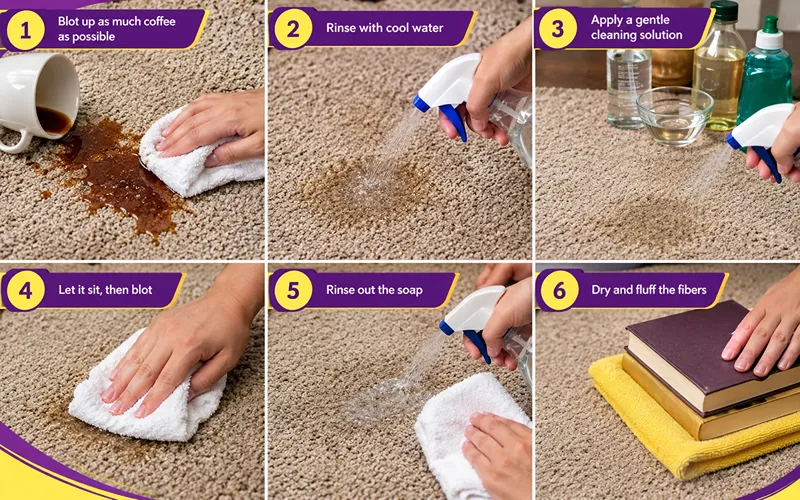
A fresh spill is the easiest to fix. Start within the first few minutes if you can, and work gently.
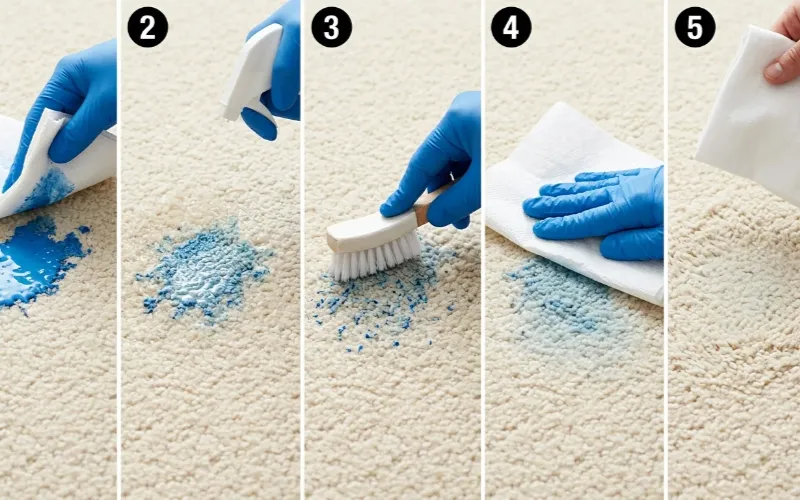
Step 1: Blot up as much coffee as possible
Press a clean white cloth or a thick wad of paper towels onto the spill. Push down firmly, lift, and repeat with a dry section. Keep going until the cloth comes away almost clean. Do not rub.
Step 2: Rinse with cool water
Lightly spray or pour a little cool water onto the spot. Then blot again. This dilutes the coffee still sitting in the fibers. Avoid hot water, because heat can help the stain set.
Step 3: Apply a gentle cleaning solution
Mix 1/4 teaspoon of clear dish soap, 1 tablespoon of white vinegar, and 2 cups of cool water in a spray bottle. Test it on a hidden patch of carpet first. Then mist the stain lightly, including a little of the area around it.
Step 4: Let it sit, then blot
Wait about 5 minutes so the solution can loosen the coffee. Blot from the outer edge toward the center. This keeps the stain from spreading into a bigger ring.
Step 5: Rinse out the soap
Spray the area with plain cool water and blot again with a dry cloth. This step matters. Soap left behind turns sticky and attracts dirt, which can make the spot look dirty again in a few weeks.
Step 6: Dry and fluff the fibers
Lay a folded dry towel over the spot and press with something heavy, like a few books, for an hour. Let it air dry fully, then vacuum to lift the pile back up.
How to Remove a Dried Coffee Stain from Carpet
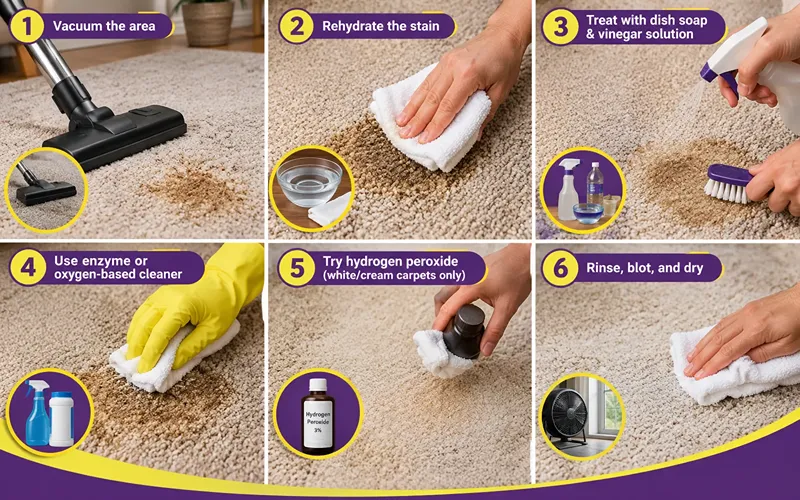
Found an old brown spot you missed? A dried coffee stain needs a bit more time, but it is usually still removable. The trick is to rehydrate the stain first, then treat it in stages, starting with the gentlest option.
Step 1: Vacuum the area
Vacuum the spot to remove loose dirt and crumbs. This stops you from turning dry grime into mud when you add liquid.
Step 2: Rehydrate the stain
Dampen a white cloth with cool water and press it onto the stain for a few minutes. Softening the dried coffee makes it much easier for any cleaner to reach the stain.
Step 3: Treat with the dish soap and vinegar solution
Use the same spray mix from the fresh-stain method. Mist the spot, wait 10 to 15 minutes, then blot from the outside in. Gently work the fibers with a soft brush if the stain is crusty.
Step 4: Move up to an enzyme or oxygen-based cleaner
If the stain is still visible, switch to a store-bought carpet stain remover labeled safe for your carpet type. Oxygen-based and enzyme formulas are designed for tannin and protein stains like coffee. Follow the label for dwell time, usually 5 to 10 minutes.
Step 5: Try hydrogen peroxide as a last resort (light carpets only)
For a stubborn stain on white or cream synthetic carpet, dab a small amount of 3% hydrogen peroxide onto the spot with a cloth. Always test in a hidden area first, because it can lighten color. Never use it on wool or dark carpet.
Step 6: Rinse, blot, and dry
Finish by rinsing with a little cool water and blotting until just damp. Dry the spot with a fan or open window, then vacuum. Old stains may need two or three rounds, so be patient between attempts.
What If the Coffee Had Milk, Cream, or Sugar?
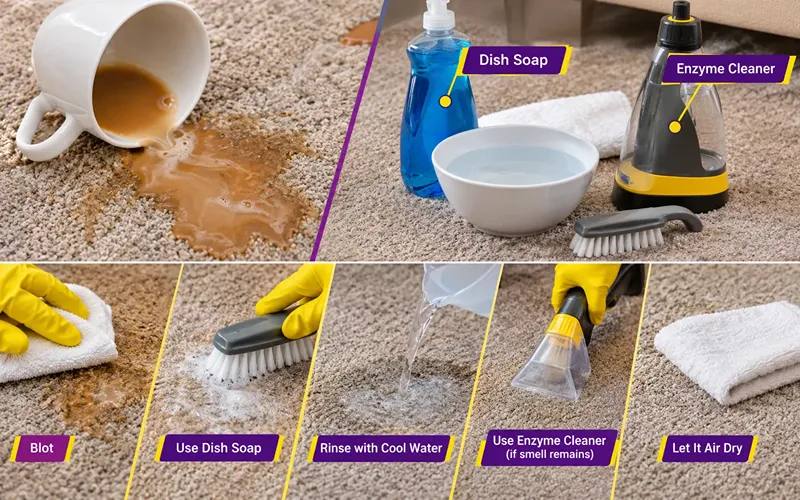
A latte or sweetened coffee leaves more than a brown mark. Milk adds fat and protein, and sugar leaves a sticky film. If these are not fully removed, the spot can attract dirt or develop a sour smell.
Follow the fresh-stain steps above, with two changes:
- Rely on dish soap first. It cuts through milk fat better than water or vinegar alone.
- Use an enzyme cleaner if a smell remains. Enzymes break down milk proteins that cause odor.
Rinse extra well with cool water, since sugar residue is what makes the spot feel tacky later. Never use hot water on milky coffee, because heat can cook the proteins into the fibers.
Check Your Carpet Type First
Not every carpet reacts the same way to cleaners. A quick check before you start can save you from a bleached or damaged patch.
| Carpet fiber | How it handles coffee | What to use |
| Nylon, polyester, olefin (synthetic) | Resists stains well; most common in homes | Dish soap mix, vinegar, oxygen cleaners, peroxide on light colors |
| Wool | Absorbent and delicate; stains set faster | Cool water and a wool-safe cleaner only; no peroxide, bleach, or strong alkalis |
| Silk, jute, sisal (natural) | Easily damaged by water and rubbing | Blot only, keep it nearly dry, and call a professional |
How to do a colorfastness test: Dab a little of your cleaner on a hidden spot, such as inside a closet or under a sofa. Wait 10 minutes, then press a white cloth on it. If color transfers or the fibers change, don’t use that cleaner.
Also check your carpet’s warranty or care label. Some manufacturers only cover damage if you use approved cleaning products.
Common Mistakes to Avoid
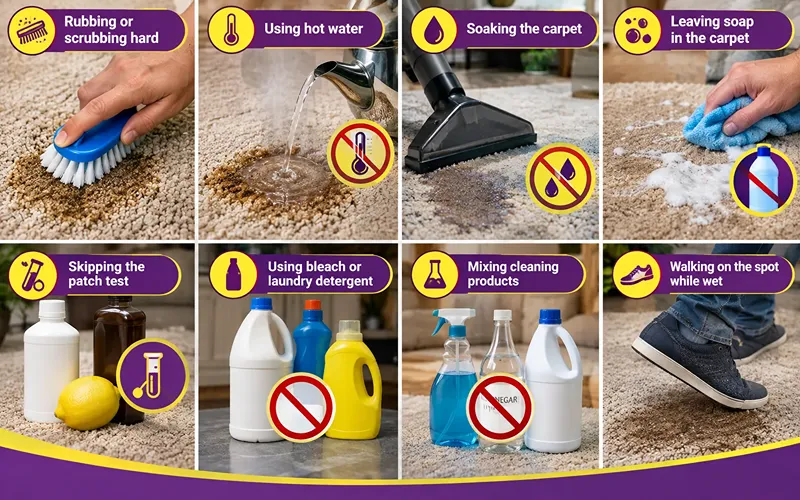
Most carpet stains that become permanent do so because of how they were cleaned, not because of the coffee itself. Avoid these mistakes:
- Rubbing or scrubbing hard. This pushes coffee deeper, spreads the stain, and frays the fibers. Always blot.
- Using hot water. Heat helps coffee tannins and milk proteins bond to the carpet.
- Soaking the carpet. Too much liquid reaches the padding underneath. The stain can then “wick” back up as it dries, and damp padding can grow mildew.
- Leaving soap in the carpet. Leftover detergent is sticky and pulls in dirt, creating a new dark spot.
- Skipping the patch test. Vinegar, lemon juice, and peroxide can discolor some carpets, especially wool and dark dyes.
- Using bleach or laundry detergent. Both can strip color and damage fibers permanently.
- Mixing cleaning products. Some combinations, such as bleach with vinegar, release harmful fumes. Use one product at a time and rinse between them.
- Walking on the spot while wet. Shoes and socks transfer dirt into the damp fibers. Let it dry fully first.
Useful Tips for Better Results
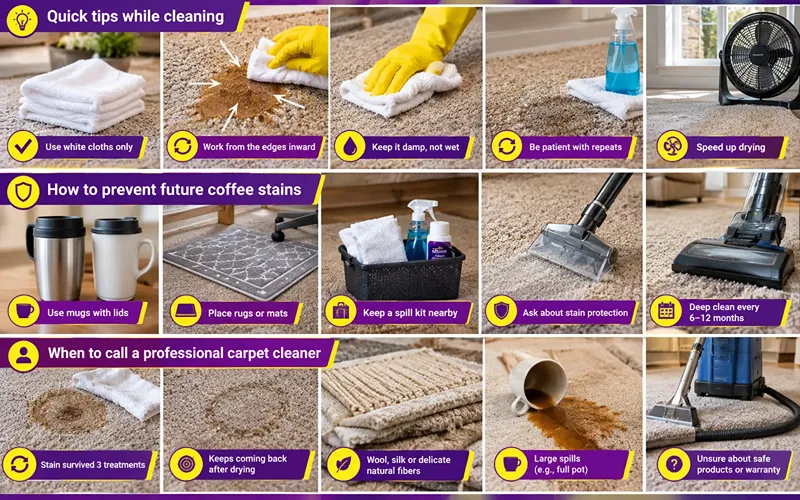
Quick tips while cleaning
- Use white cloths only. Colored towels can transfer dye onto a light carpet.
- Work from the edges inward. This keeps the stain from growing into a larger ring.
- Keep it damp, not wet. A damp stain lifts more easily than a dry one, but a soaked one reaches the padding.
- Be patient with repeats. Two or three light treatments work better than one heavy one.
- Speed up drying. A fan or open window helps prevent water rings and musty smells.
How to prevent future coffee stains
- Use mugs with lids or travel cups in carpeted rooms.
- Place rugs or mats under desks and in favorite coffee spots.
- Keep a small spill kit nearby: white cloths, a spray bottle, and a carpet-safe stain remover.
- Ask about a stain-protection treatment after a professional deep clean.
- Deep clean carpets every 6 to 12 months to lift buildup before it becomes a stain.
When to call a professional carpet cleaner
Home methods work for most coffee spills. Call a professional when:
- The stain has survived three rounds of treatment.
- The spot keeps coming back after drying, a sign coffee reached the padding.
- Your carpet is wool, silk, or another delicate natural fiber.
- The spill was large, like a full pot of coffee.
- You are unsure which products are safe for your carpet or warranty.
Final Thoughts
Knowing how to remove coffee stain from carpet comes down to three habits: act fast, blot instead of rubbing, and use cool water with gentle cleaners. Start mild, test first, and rinse well so nothing sticky stays behind.
For fresh spills, water and a simple soap mix usually do the job. For dried stains, rehydrate first and step up to an enzyme or oxygen cleaner. If a stain still won’t budge, a professional cleaner can finish the job safely.
Frequently Asked Questions
Can coffee stains be permanent on carpet?
Sometimes, but rarely if you act quickly. Fresh stains almost always come out. Old stains that were cleaned with heat or harsh chemicals are the hardest to remove.
Does vinegar remove coffee stains from carpet?
Yes, diluted white vinegar helps loosen coffee tannins. It works best mixed with a little dish soap and cool water. Rinse afterward, since the smell can linger for a day or so.
Is baking soda good for coffee stains?
Baking soda is better at absorbing moisture and odor than lifting color. Sprinkle it on a damp spot after cleaning, let it sit 15 to 20 minutes, then vacuum thoroughly so no powder stays in the fibers.
What about club soda, toothpaste, or beer?
These are popular home remedies, but results vary. Club soda may help dilute a very fresh spill. Toothpaste and beer can leave residue or smells. A mild soap solution is more reliable and easier to rinse out.
How long should I wait before walking on the cleaned spot?
Wait until it is completely dry, usually a few hours with a fan, or overnight without one.