
A dropped plate of curry, a knocked-over coffee mug, a muddy pair of shoes, or a puppy accident. Carpet stains happen in every home, usually at the worst possible moment. The good news is that most of them can be removed with simple products you already own, as long as you use the right method.
In this guide, you’ll learn how to clean carpet stains of every common type, which products actually work, the mistakes that make stains worse, and how to protect your carpet so you spend less time scrubbing in the future.
Why Acting Fast Makes All the Difference
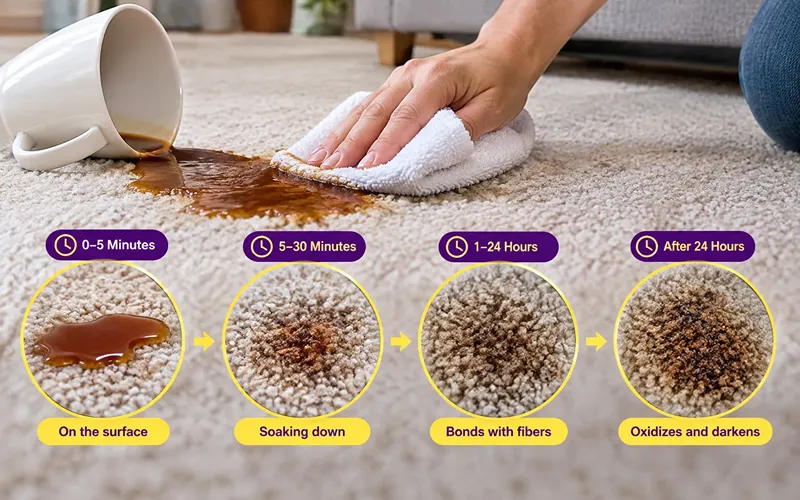
The single biggest factor in stain removal is time. A fresh spill sits mostly on the surface of the carpet fibers. Within minutes, it starts soaking down toward the backing and pad. Within hours, it begins to bond with the fibers, and some stains (like coffee and tomato sauce) start to oxidize and darken.
A spill you treat in the first five minutes can often be removed with nothing more than water and a clean towel. The same spill left overnight may need several rounds of cleaning, or a professional. So if you remember only one thing from this article, make it this: deal with spills right away.
The Golden Rules of Carpet Stain Removal
Before we look at specific stains, here are the basic rules that apply to almost every situation.
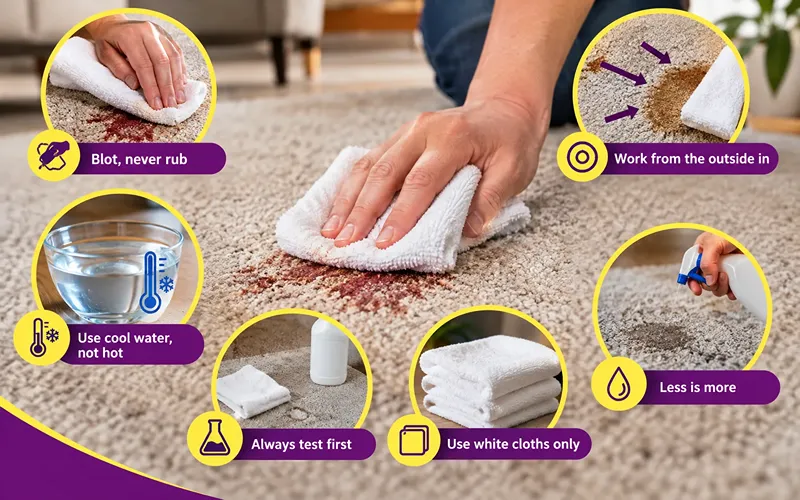
Blot, never rub. Rubbing pushes the stain deeper and spreads it wider. It also frays and untwists carpet fibers, leaving a fuzzy, damaged patch. Press a clean cloth firmly onto the stain, lift, and repeat with a fresh section.
Work from the outside in. Start blotting at the outer edge of the stain and move toward the center. This keeps the stain from growing.
Use cool water, not hot. Hot water can “cook” protein-based stains like milk, egg, blood and urine, setting them permanently into the fibers. Cool or lukewarm water is the safer choice.
Always test first. Try any cleaner on a hidden spot, such as inside a closet or under a sofa. Wait a few minutes, then blot with a white cloth. If color transfers or the fibers change texture, don’t use that product.
Use white cloths only. Colored or patterned towels can bleed dye into your carpet, especially when damp.
Less is more. Too much liquid soaks the pad and can cause mold, odors and stains that reappear later. Apply cleaners in small amounts and build up only if needed.
The Best Products for Cleaning Carpet Stains
You don’t need a cupboard full of special chemicals. These basic items handle the vast majority of household stains.
| Product | Best For | Caution |
| Clear dish soap | Food, mud, general spills | Rinse well; residue attracts dirt |
| White vinegar | Coffee, pet odors, sugary drinks | Avoid on wool and silk |
| Baking soda | Absorbing oil and odors | Vacuum fully once dry |
| Cornstarch | Fresh grease and oil | Works best on wet spills |
| Enzyme cleaner | Pet urine, vomit, protein stains | Follow label dwell times |
| Hydrogen peroxide (3%) | Tough stains on light carpets | Can lighten colored carpet |
| Rubbing alcohol | Oil, ink, leftover grease | Apply to cloth, not carpet |
| Club soda | Fresh drink spills | Mild; best on new stains |
It also helps to keep a few tools on hand: a spray bottle, a dull knife or spoon for scraping, a soft brush, plenty of white cloths or paper towels, and a vacuum.
A note on carpet type: Most modern carpets are synthetic (nylon, polyester or olefin) and handle these products well. Natural fibers like wool and silk are more delicate. Acids like vinegar, and alkaline cleaners like strong detergents, can damage them. If you have a wool carpet or a valuable handmade rug, use a wool-safe cleaner or call a professional.
A Simple Step-by-Step Method for Most Stains
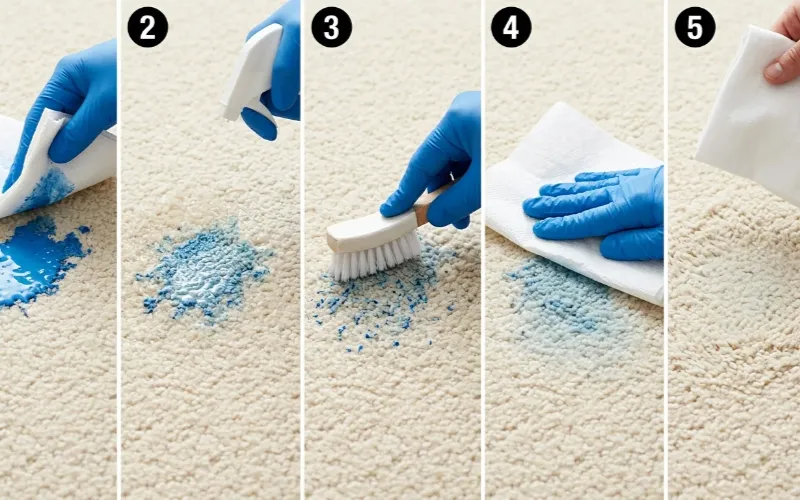
If you’re not sure what caused a stain, this general method is a safe place to start. It forms the base of how to clean carpet stains of almost any kind.
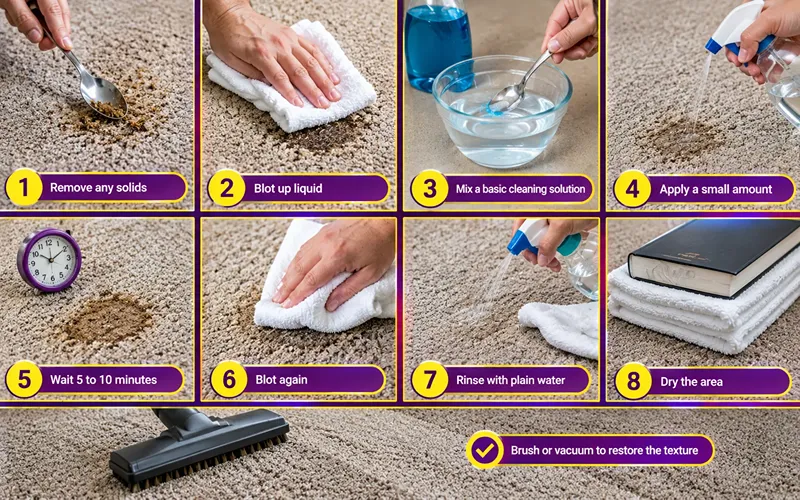
- Remove any solids. Gently scrape up food, mud or other debris with a spoon or dull knife, lifting toward the center.
- Blot up liquid. Press white towels onto the spot until no more moisture transfers.
- Mix a basic cleaning solution. Stir 1 teaspoon of clear dish soap into 2 cups of cool water.
- Apply a small amount. Lightly dampen the stain with a spray bottle or cloth. Don’t soak it.
- Wait 5 to 10 minutes. This gives the solution time to loosen the stain.
- Blot again. Use a fresh area of the cloth each time until the stain stops transferring.
- Rinse with plain water. Lightly spray clean water on the area and blot. This removes soap residue, which would otherwise attract new dirt.
- Dry the area. Place a thick layer of dry towels over the spot and press down with something heavy, like a stack of books, for a few hours.
Once dry, gently brush or vacuum the fibers to restore the carpet’s texture.
How to Remove Common Carpet Stains
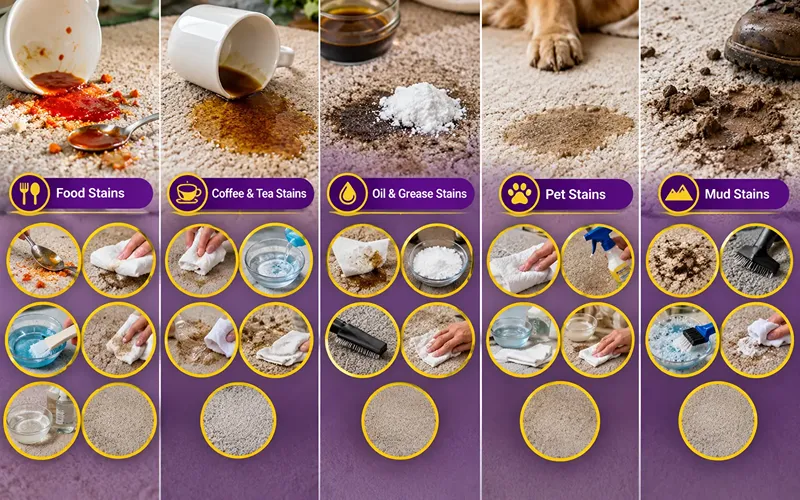
Different stains need different approaches. Here’s how to handle the five most common ones.
How to Remove Food Stains
Food stains are tricky because they often combine several things at once: grease, color, sugar and protein.
- Scrape away any solid food with a spoon.
- Blot up as much moisture as possible.
- Apply the basic dish soap solution and let it sit for 5 minutes.
- Blot until no more color transfers.
- For tomato-based sauces, ketchup or fruit juice, follow with a solution of 1 part white vinegar to 2 parts water, then blot again.
- Rinse with cool water and dry.
Brightly colored foods like curry, turmeric and beetroot contain strong natural dyes that can be stubborn. If some yellow or red remains on a light-colored carpet, carefully dab on a small amount of 3% hydrogen peroxide after a patch test. Leave it for a few minutes, then blot and rinse. On darker carpets, skip the peroxide, since it can lighten the carpet itself.
For sticky, sugary spills like soda or syrup, extra rinsing is key. Sugar that stays in the fibers attracts dirt and turns into a dark spot weeks later.
How to Remove Coffee and Tea Stains
Coffee and tea contain tannins, natural plant compounds that stain quickly and darken over time. Speed matters here more than almost anywhere else.
- Blot the spill immediately with a dry white towel.
- Pour a small amount of cool water on the spot and blot again. This dilutes the coffee.
- Mix 1 tablespoon of dish soap and 1 tablespoon of white vinegar in 2 cups of cool water.
- Apply the mixture with a cloth and let it sit for 10 to 15 minutes.
- Blot until the stain lifts, then rinse with plain water and dry.
If your coffee had milk or cream in it, stick to cool water throughout, because the dairy adds protein that heat will set. For an old coffee stain on a light carpet, a small amount of 3% hydrogen peroxide can help remove the last traces, but always test first.
How to Remove Oil and Grease Stains
Oil doesn’t mix with water, so water-based cleaning alone won’t lift it. Think of this as a two-stage job: first absorb, then dissolve.
- Blot up any liquid oil with paper towels.
- Cover the stain generously with baking soda or cornstarch. These powders soak oil out of the fibers.
- Leave it for at least 30 minutes. For heavy spills, leave it for a few hours.
- Vacuum up the powder thoroughly.
- Apply the dish soap solution. Dish soap is designed to break down grease, which makes it perfect here.
- Blot, rinse with water, and dry.
If a greasy shadow remains, dampen a white cloth with rubbing alcohol and dab the spot. Apply the alcohol to the cloth, not straight onto the carpet, because too much can weaken the glue in the carpet backing. This method works for cooking oil, butter, salad dressing, lotion and even car grease tracked in on shoes.
How to Remove Pet Stains
Pet urine, vomit and feces are among the hardest stains to deal with because of the lingering smell. If the odor isn’t fully removed, pets often return to the same spot.
For urine, follow these steps:
- Blot up as much urine as possible. Stand on a thick pad of towels to press out moisture that has soaked deep.
- Rinse the spot with cool water and blot again.
- Apply an enzyme-based pet stain cleaner. Enzyme cleaners contain proteins that break down the uric acid and organic matter that cause the smell. Nothing else does this as effectively.
- Use enough cleaner to reach as deep as the urine went, and leave it as long as the label says. This is often several hours.
- Blot away the excess and let the area air-dry completely.
If you don’t have an enzyme cleaner, a solution of 1 part white vinegar to 2 parts water can reduce odor. After it dries, sprinkle baking soda over the spot, leave it for a few hours, and vacuum.
For vomit or feces, remove the solids first with a paper towel or plastic scraper, lifting rather than pushing. Then use the dish soap solution, rinse, and finish with an enzyme cleaner.
Two important warnings: never use ammonia-based cleaners on pet stains, because ammonia smells similar to urine and can encourage pets to mark the spot again. And avoid steam cleaning pet stains until the odor is gone, since heat can set the smell permanently.
How to Remove Mud Stains
Mud is the one stain where waiting is actually the right move. Trying to clean wet mud smears it deeper into the carpet.
- Let the mud dry completely. This can take a few hours.
- Break up the dried mud with a spoon or stiff brush.
- Vacuum slowly and thoroughly, going over the spot from several directions.
- If a brown mark remains, apply the dish soap solution and let it sit for 5 minutes.
- Blot, rinse with clean water, and dry.
Red clay soil can leave an orange tint that takes a few rounds. Be patient and repeat the soap-and-blot steps rather than scrubbing harder.
How to Deal With Old or Set-In Stains
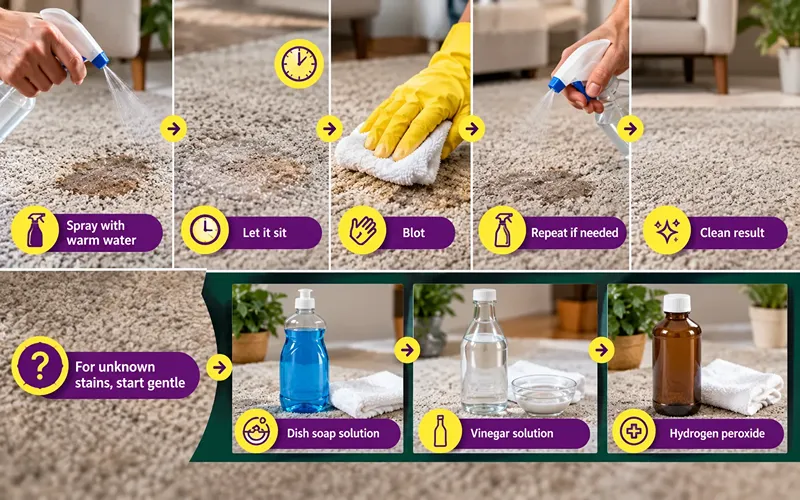
Old stains aren’t always permanent. The trick is to soften them first. Lightly spray the stain with warm (not hot) water and let it sit for a few minutes to rehydrate the dried residue. Then treat it with the method for that stain type, allowing longer dwell times and more rounds of blotting.
For old stains of unknown origin, start with the gentlest option (dish soap solution), then move to vinegar solution, and only then try stronger products like hydrogen peroxide. Work patiently; several light treatments are safer than one heavy one.
Common Mistakes to Avoid
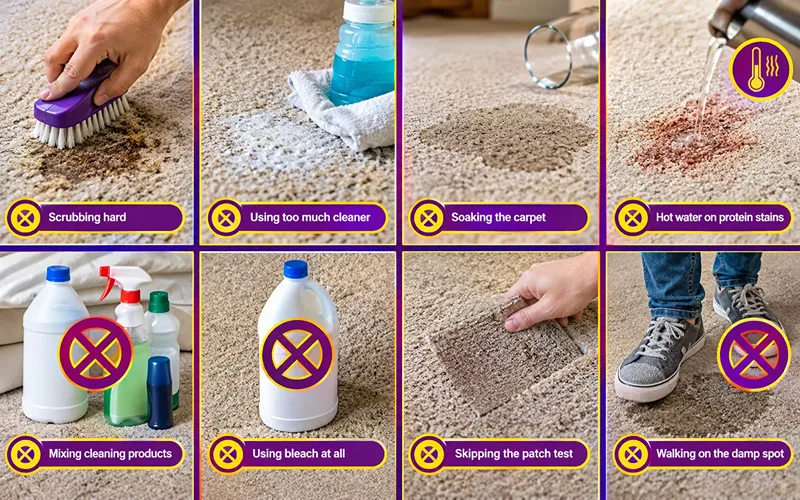
Knowing how to clean carpet stains also means knowing what not to do. These mistakes cause more damage than the stains themselves.
Scrubbing hard. It spreads the stain and permanently damages fibers.
Using too much cleaner. Leftover soap leaves a sticky film that attracts dirt, creating a new, darker spot over time.
Soaking the carpet. Excess moisture reaches the pad, where it can cause mold, bad smells and “wicking.” Wicking is when a stain seems to vanish, then reappears as the carpet dries because residue deep below rises back to the surface. If this happens, blot again and dry with weighted towels.
Using hot water on protein stains. Heat sets milk, egg, blood and urine stains.
Mixing cleaning products. Never mix bleach with vinegar or ammonia, as these combinations release toxic gases. Don’t combine hydrogen peroxide and vinegar in the same container either. Use one product, rinse, and then try another if needed.
Using bleach at all. Household bleach will remove color from almost any carpet and can weaken fibers.
Skipping the patch test. A quick test takes two minutes and can save your entire carpet.
Walking on the damp spot. Wet fibers pick up dirt from shoes and socks easily. Keep traffic off the area until it’s fully dry.
How to Protect Your Carpet From Future Stains
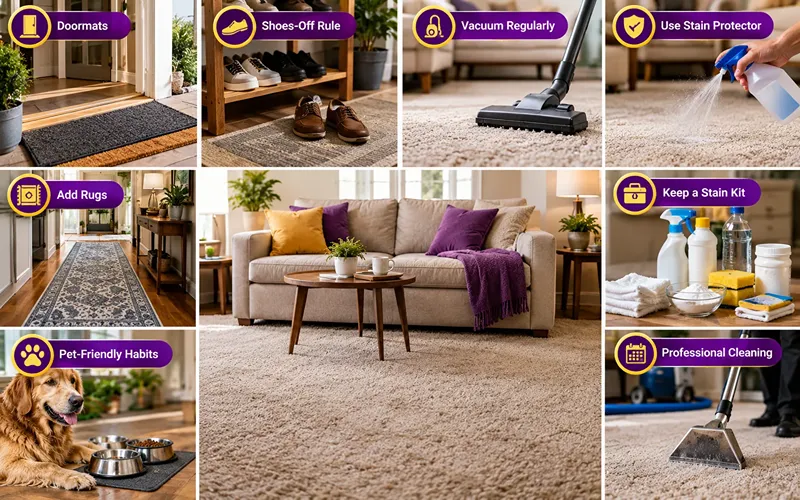
The easiest stain to clean is the one that never happens. These habits will keep your carpet looking fresh for longer.
Put doormats at every entrance. Use one outside and one inside. Together they trap a large share of the dirt and mud that would otherwise reach your carpet.
Try a shoes-off rule. Shoes carry soil, oil from roads, and grime. Keeping them at the door dramatically reduces tracked-in dirt.
Vacuum regularly. Vacuum high-traffic areas at least twice a week and the rest of the house weekly. Dirt particles act like sandpaper on fibers, making carpet look dull and more likely to hold stains.
Use a carpet stain protector. Many new carpets come pre-treated, but the protection wears off over time. A spray-on protector reapplied after professional cleaning helps spills bead up so you can blot them away before they soak in.
Add rugs in high-risk areas. Washable rugs or runners under dining tables, in hallways and near pet feeding spots take the damage instead of your wall-to-wall carpet.
Keep a stain kit ready. Store white cloths, a spray bottle, dish soap, white vinegar, baking soda and an enzyme cleaner in one place, so you can act within minutes.
Set pet-friendly habits. Keep pets’ paws clean after walks, put their food and water on washable mats, and stay consistent with house training.
Schedule professional deep cleaning. Most carpet manufacturers recommend a professional hot water extraction clean every 12 to 18 months. Check your warranty, since some require it to stay valid.
When to Call a Professional
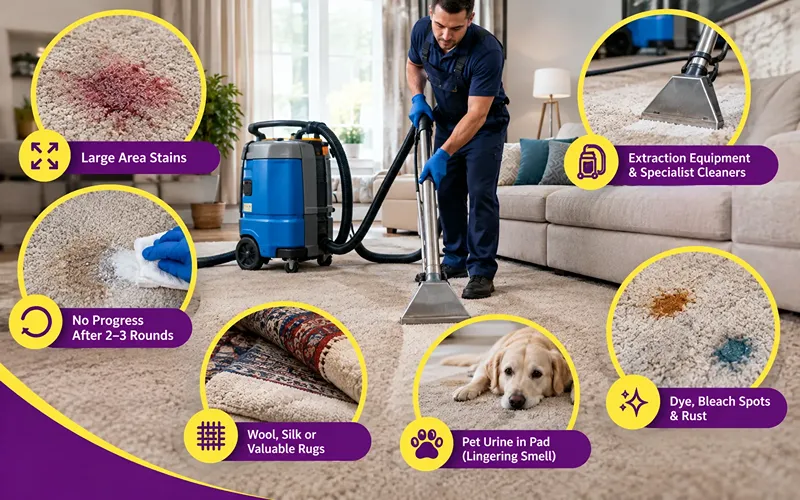
Home methods work for most everyday spills, but some situations are better left to experts. Call a professional carpet cleaner if a stain covers a large area, if you’ve tried two or three rounds without progress, if your carpet is wool, silk or a valuable rug, or if pet urine has soaked into the pad and the smell won’t go away. Professionals have extraction equipment that reaches deep into the pad and specialist cleaners for difficult stains like dye, bleach spots and rust.
Final Thoughts
Learning how to clean carpet stains is mostly about a few simple habits: act fast, blot instead of rubbing, use cool water, match the method to the stain, and rinse away every trace of cleaner. With a small stain kit and the steps in this guide, you can handle food spills, coffee accidents, grease marks, pet messes and muddy footprints with confidence. Add a few prevention habits, and your carpet will stay cleaner, softer and better-looking for years to come.
Frequently Asked Questions
What is the best homemade carpet stain remover?
For most stains, a mix of 1 teaspoon clear dish soap in 2 cups of cool water is the safest and most effective starting point. For coffee and odors, add 1 tablespoon of white vinegar.
Does vinegar damage carpet?
Diluted white vinegar is safe for most synthetic carpets. However, it can damage wool, silk and some natural fibers, so check your carpet type and patch test first.
Can baking soda remove carpet stains on its own?
Baking soda is excellent at absorbing oil and odors, but it doesn’t lift most stains alone. Use it as one step alongside a cleaning solution.
Why does my carpet stain keep coming back?
This is usually caused by leftover soap residue or by wicking, where residue deep in the pad rises as the carpet dries. Rinse with clean water and dry with weighted towels.
How long should a carpet take to dry after spot cleaning?
Usually 2 to 6 hours. Open windows or use a fan to speed it up and prevent musty smells.