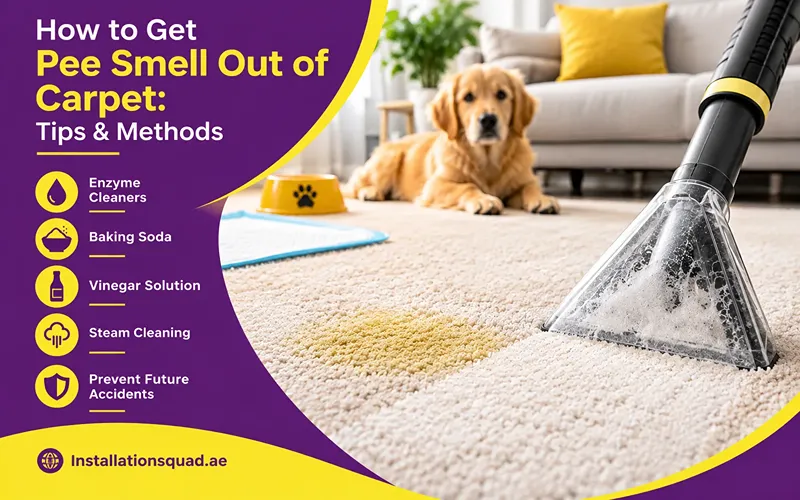
You walk into a room, and there it is: that sharp, stale smell that tells you someone had an accident on the carpet. Maybe it was a new puppy, an older cat, or a toddler in the middle of potty training. Whatever the cause, urine odor is one of the hardest smells to get rid of, and it rarely goes away on its own.
The good news is that you don’t need expensive equipment to fix it. If you’ve been wondering how to get pee smell out of carpet for good, the answer usually comes down to three things: acting quickly, using the right cleaner, and giving that cleaner enough time to work. Proper care can also help maintain your carpet’s condition after professional Carpet Installation in Dubai.
In this guide, you’ll learn why urine smells so stubborn, which household ingredients actually help, and when an enzymatic cleaner is the better choice. You’ll also find step-by-step methods for fresh stains, dried stains, and pet urine, plus the mistakes that can make the smell worse.
Why Urine Smell Lingers in Carpet
Urine smell sticks around because its odor comes from more than just the liquid. Understanding what’s going on makes it much easier to pick the right method.
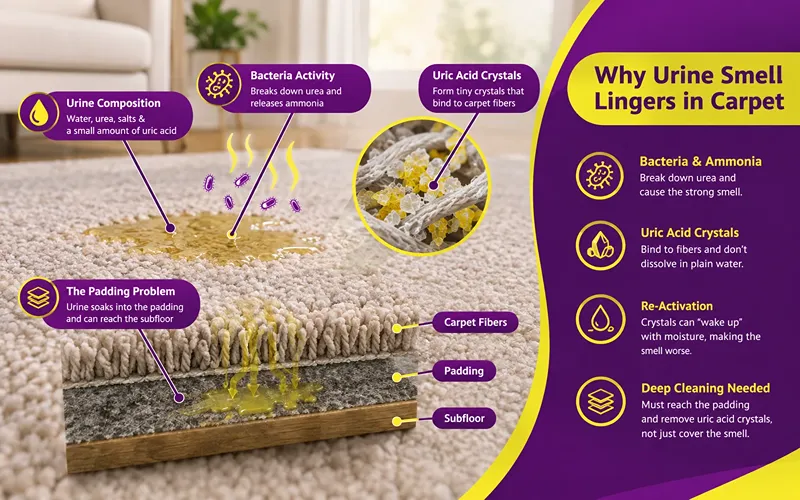
When urine first lands on carpet, it’s mostly water, urea, salts, and a small amount of uric acid. Fresh urine doesn’t smell very strong. As it sits, bacteria break down the urea and release ammonia, which causes that sharp, eye-watering smell.
Over time, the uric acid forms tiny crystals that bind tightly to carpet fibers. These crystals don’t dissolve well in plain water, so normal cleaning often leaves them behind. They can also “wake up” when moisture returns, which is why many people notice the smell gets worse on humid days or right after shampooing the carpet.
The padding problem
Carpet is not just the surface you see. Underneath is a layer of padding, and below that is the subfloor. Urine soaks down quickly, especially from a large accident. If you only clean the top fibers, the source of the smell stays in the padding and keeps coming back.
So a good cleaning method needs to do two things:
- Reach as deep as the urine went
- Break down or remove the uric acid crystals, not just cover the smell
What You’ll Need
Most of these supplies are already in your kitchen or cleaning cupboard. You won’t need all of them for every stain, but it helps to have them ready.
Household ingredients
- White vinegar: Its mild acidity helps neutralize the ammonia in urine and loosens fresh residue.
- Baking soda: Absorbs moisture and soaks up leftover odor as it dries.
- 3% hydrogen peroxide: Helps lift stains and break down odor compounds. It can lighten some carpets, so always spot test first.
- Mild liquid dish soap: A small squeeze helps lift residue from fibers. Use a clear, dye-free soap.
- Cool water: For diluting and rinsing. Avoid hot water.
Tools
- Paper towels or old white cloths (colored cloths can transfer dye)
- A spray bottle
- A soft-bristle brush or old toothbrush
- A vacuum cleaner
- A wet/dry vacuum or carpet extractor (helpful for large or old stains)
- Rubber gloves
- A UV blacklight flashlight (for finding hidden stains)
Enzymatic cleaner
An enzymatic cleaner is a product made with enzymes or friendly bacteria that break down the proteins and uric acid in urine. It’s the most reliable option for old stains and pet accidents. You’ll find these at pet stores, supermarkets, and online. Look for a label that says it’s made for urine, not just general stains.
How to Clean Fresh Urine Stains (Step by Step)
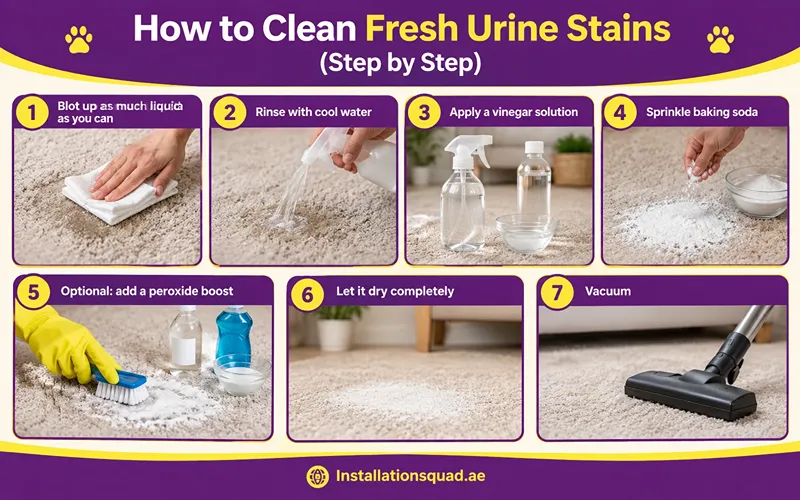
Fresh urine is the easiest to deal with because the uric acid hasn’t had time to crystallize. The faster you act, the less likely you are to have a lingering smell.
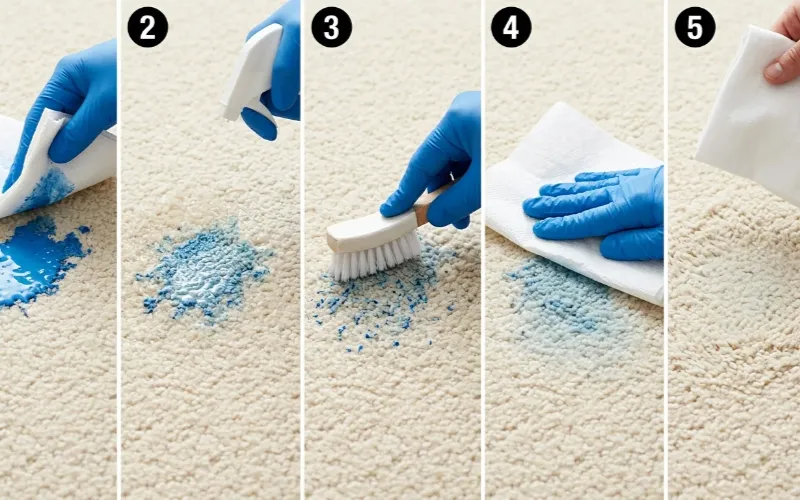
- Blot up as much liquid as you can. Press a thick layer of paper towels or a white cloth firmly onto the spot. Stand on it if you need to. Replace the towels and repeat until they come up almost dry. Don’t rub, as that spreads the urine and pushes it deeper.
- Rinse with cool water. Pour a small amount of cool water over the area, then blot again. This dilutes what’s left in the fibers.
- Apply a vinegar solution. Mix equal parts white vinegar and cool water in a spray bottle. Spray the area generously, enough to reach as deep as the urine went. Let it sit for 5 to 10 minutes, then blot.
- Sprinkle baking soda. Once the area is just damp, cover it with a generous layer of baking soda. It will pull up moisture and absorb remaining odor.
- Optional: add a peroxide boost. For a stronger treatment, mix about half a cup of 3% hydrogen peroxide with one teaspoon of dish soap. Drizzle it over the baking soda and gently work it in with a brush. Spot test first on a hidden area of carpet.
- Let it dry completely. Leave the area alone for several hours or overnight until the baking soda is dry and crusty.
- Vacuum. Vacuum up all the baking soda. Go over the spot a few times to remove the residue from deep in the pile.
If you still notice a faint smell after the area is fully dry, follow up with an enzymatic cleaner. A stubborn smell usually means some urine reached the padding.
How to Remove Dried and Old Urine Stains
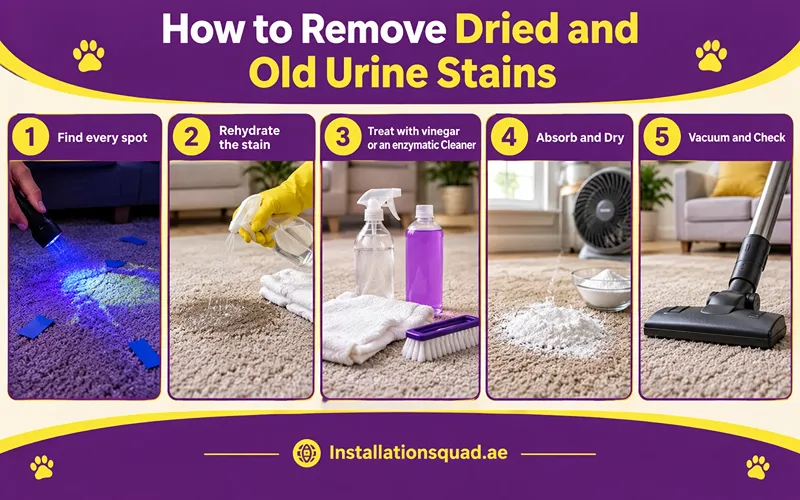
Dried urine is tougher because the uric acid has already formed crystals that cling to fibers and padding. You’ll need more liquid, more time, and often more than one round of treatment.
Step 1: Find every spot
Old stains aren’t always visible, but they still smell. Turn off the lights and shine a UV blacklight over the carpet. Urine residue usually glows a yellow-green color. Mark each spot with painter’s tape or a sticky note so you don’t miss any.
If you don’t have a blacklight, use your nose. Get close to the floor and sniff along walls, corners, and the edges of furniture, where pets often go.
Step 2: Rehydrate the stain
Lightly dampen the area with cool water. This loosens the dried residue and lets your cleaner work more deeply. Blot up the excess with a towel. If you have a wet/dry vacuum, use it to pull the water back out.
Step 3: Treat with vinegar or an enzymatic Cleaner
For a light, older smell, spray the 1:1 vinegar and water solution, let it sit for 10 to 15 minutes, and blot.
For strong or repeat odors, skip straight to an enzymatic cleaner. Soak the spot thoroughly so the product reaches the padding. A good rule of thumb is to use at least as much cleaner as the amount of urine that was there. See the next section for how to use it properly.
Step 4: Absorb and Dry
After treatment, cover the area with baking soda (for the vinegar method) or leave it to air dry (for the enzyme method). Drying can take 24 to 48 hours. Open a window or run a fan to help.
Step 5: Vacuum and Check
Once the area is fully dry, vacuum and smell the spot again. Very old or large stains often need two or three treatments before the odor is completely gone. Be patient; each round removes more of the crystals.
Using Enzymatic Cleaners the Right Way
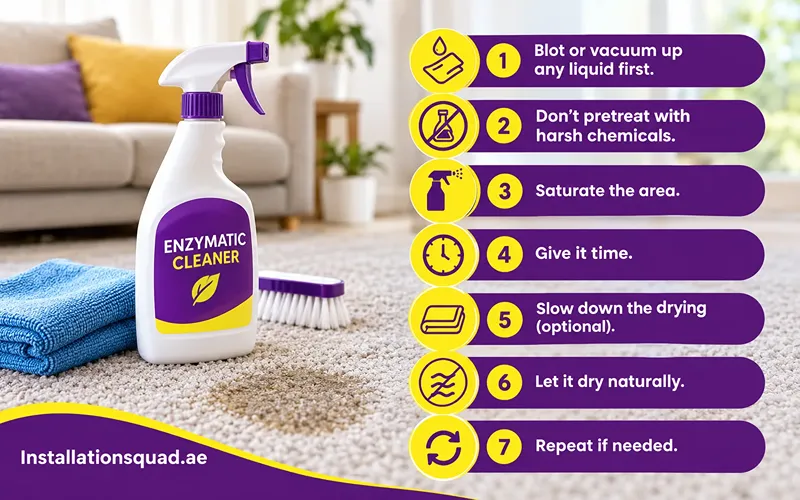
Enzymatic cleaners are the most effective way to remove urine odor completely, especially from old or repeated accidents. Instead of masking the smell, the enzymes break down uric acid and other odor-causing compounds into simple substances that can be cleaned away or evaporate.
The catch is that they need the right conditions to work. Follow these steps for the best results:
- Blot or vacuum up any liquid first. Enzymes work best on damp, not soaking, carpet.
- Don’t pretreat with harsh chemicals. Strong cleaners, bleach, and some disinfectants can kill the enzymes or bacteria in the product. If you already used vinegar or another cleaner, rinse the spot with plain water and blot before applying the enzyme cleaner.
- Saturate the area. Pour or spray enough cleaner to soak the carpet, padding, and a little beyond the edges of the stain. Urine spreads wider underneath than it looks on top.
- Give it time. Read the label, but most products need at least 10 to 15 minutes of contact, and many work best when left to air dry over a day or two.
- Slow down the drying (optional). Some people lay a damp towel or a sheet of plastic wrap loosely over the spot. This keeps it moist longer so the enzymes keep working.
- Let it dry naturally. Don’t use heat to speed it up. Once dry, vacuum the area.
- Repeat if needed. Deep or old stains may need a second application.
A mild smell during the process is normal. It should fade as the area dries and the enzymes finish their job.
Dealing With Pet Urine Odors

Pet urine needs extra attention for one big reason: if your pet can still smell it, they’re likely to go there again. Dogs and cats have a far stronger sense of smell than people, so a spot that seems clean to you may still say “bathroom” to them.
Cat urine
Cat urine is more concentrated than dog urine, so it tends to smell stronger and cling longer. An enzymatic cleaner is almost always the best choice. Treat the spot thoroughly, and expect to repeat the process for older stains.
Dog urine
Dog accidents are often larger in volume, which means they’re more likely to reach the padding. Blot well, use plenty of cleaner, and consider a wet/dry vacuum to pull liquid out from below the surface.
Stop repeat accidents
- Clean every spot completely, even ones you can’t see. A blacklight helps here.
- Block access to problem areas until the cleaning is finished and dry.
- Place a food bowl, bed, or toy on a cleaned spot. Many pets avoid going where they eat or sleep.
- Keep litter boxes clean and in quiet, easy-to-reach places.
- Take dogs outside more often, especially after meals, naps, and play.
If a pet that was house-trained suddenly starts having accidents, talk to your vet. Frequent urination or going outside the litter box can be a sign of a medical problem, such as a urinary tract infection, or of stress.
Common Mistakes to Avoid
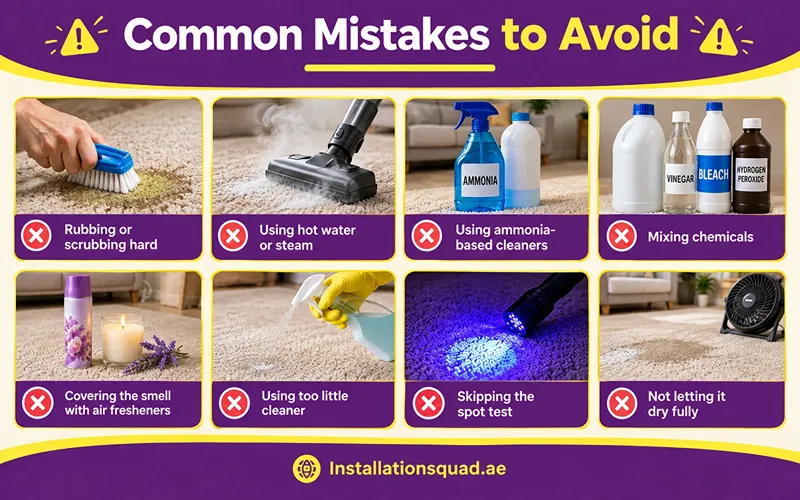
Some popular cleaning habits can lock the smell in or make it worse. Watch out for these:
- Rubbing or scrubbing hard. This spreads urine to a wider area and pushes it deeper into the padding. Always blot.
- Using hot water or steam. Heat can bond urine proteins to the fibers and set both the stain and the smell. Use cool water, and don’t steam clean a urine spot until the odor is fully gone.
- Using ammonia-based cleaners. Urine already contains ammonia, so these products can make the area smell like urine to pets and invite them back.
- Mixing chemicals. Never mix bleach with vinegar or ammonia, as this releases toxic gases. Don’t combine vinegar and hydrogen peroxide in the same bottle either. Apply products separately and rinse in between.
- Covering the smell with air fresheners. Sprays, powders, and scented candles only mask the odor for a short time. The source is still there.
- Using too little cleaner. A light mist only treats the surface. The cleaner needs to reach everywhere the urine did.
- Skipping the spot test. Hydrogen peroxide and some cleaners can fade or discolor carpet. Test on a hidden spot first and wait to see how it dries.
- Not letting it dry fully. Vacuuming or walking on a damp spot too soon can stop the process early and spread residue.
Tips to Prevent Lingering Smells
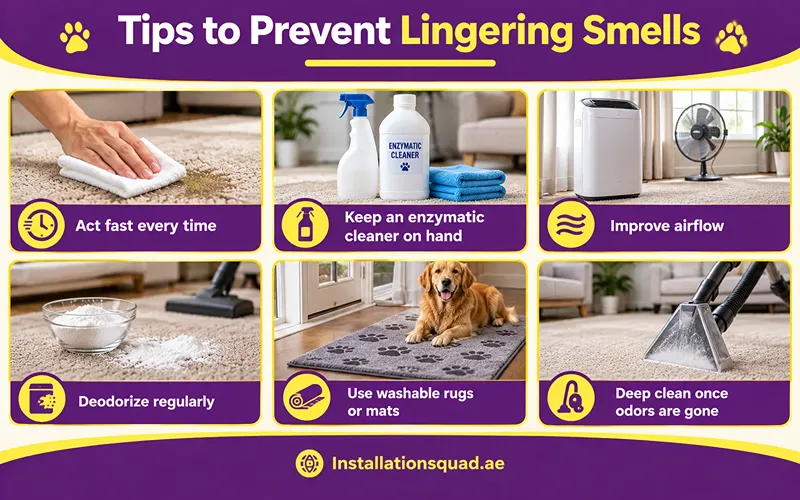
Once the carpet smells fresh again, a few simple habits will help keep it that way.
- Act fast every time. The sooner you blot and treat an accident, the less chance urine has to soak in and crystallize.
- Keep an enzymatic cleaner on hand. Having it ready means you can treat a spot within minutes instead of hours.
- Improve airflow. Open windows, run fans, or use a dehumidifier. Lower humidity helps carpets dry faster and keeps old residue from reactivating.
- Deodorize regularly. Sprinkle baking soda over high-risk areas, leave it for a few hours, then vacuum. It’s a cheap way to absorb mild odors.
- Use washable rugs or mats. Place them in areas where accidents are common, such as near the back door or a pet’s bed.
- Deep clean once odors are gone. A professional carpet clean or carpet extractor every 12 to 18 months helps remove built-up residue. Just make sure urine spots are fully treated first.
When to call a professional
Sometimes home methods aren’t enough. Consider a professional carpet cleaner if:
- The smell returns after several rounds of treatment
- The accident was very large or happened repeatedly in the same spot
- Urine has soaked through to the subfloor
- You’re dealing with an expensive or delicate carpet, such as wool or silk
In severe cases, the stained section of padding may need to be cut out and replaced, and the subfloor sealed with an odor-blocking primer. A professional can tell you whether that’s needed.
Conclusion
Getting urine odor out of carpet is very doable once you know what you’re up against. For fresh accidents, blot right away, rinse with cool water, treat with a vinegar solution, and finish with baking soda. For dried stains and pet urine, find every spot, rehydrate it, and use an enzymatic cleaner that can break down the uric acid crystals deep in the padding.
Avoid heat, ammonia, harsh scrubbing, and quick fixes like air fresheners. Use plenty of cleaner, give it time to work, and repeat if needed. With a little patience, your carpet and your whole room can smell fresh again.