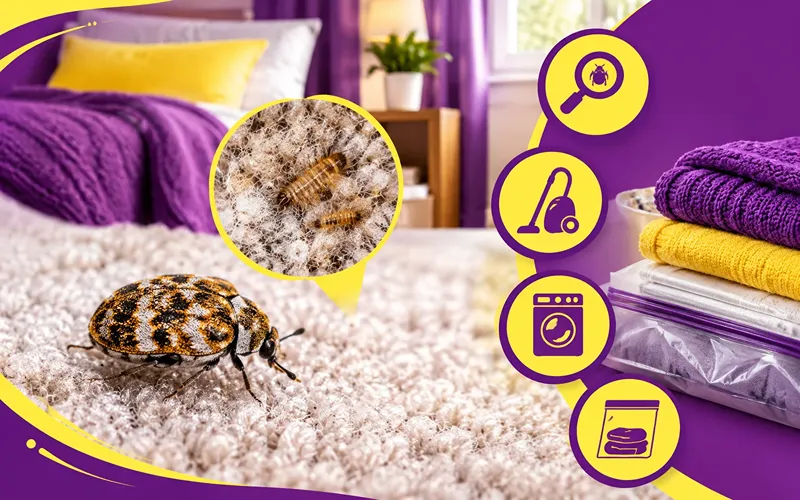
Small holes in your favorite sweater. A strange, hairy little bug crawling near the windowsill. A dusty residue on your closet shelf that you can’t quite explain. If any of this sounds familiar, you’re probably not dealing with moths, you’re dealing with carpet beetles.
Carpet beetles are one of the most overlooked household pests. They don’t bite, they don’t spread disease, and they’re easy to mistake for lint or crumbs. But left alone, their larvae can quietly chew through wool sweaters, silk scarves, area rugs, and upholstered furniture for months before anyone notices. The good news is that once you know what you’re dealing with, clearing them out is a manageable job, most cases don’t even need a professional visit.
This guide by Installation Squad walks you through how to identify a carpet beetle problem, the most effective ways to eliminate them, and how to keep them from coming back.
What Are Carpet Beetles?
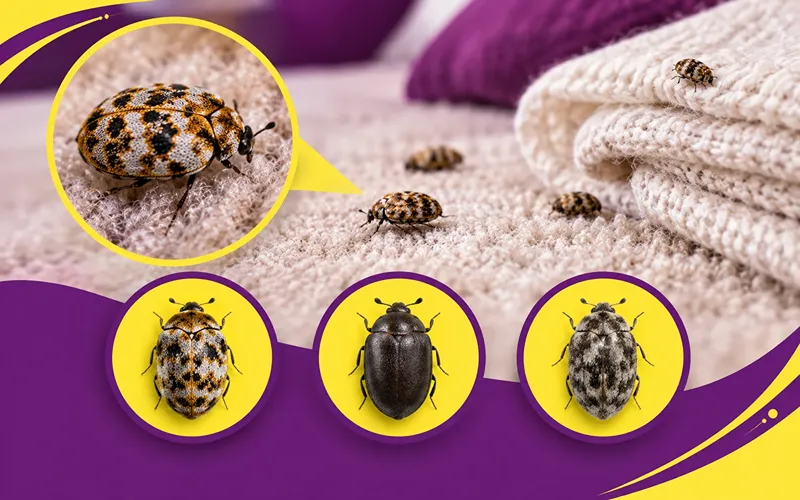
Carpet beetles are small, oval-shaped insects belonging to the Dermestidae family. Adults are usually 1/16 to 1/8 inch long and often have a mottled pattern of black, white, brown, or yellow scales on their backs. There are a few common species you’re likely to encounter indoors:
- Varied carpet beetle: Mottled white, brown, and yellow patches; the most commonly found species in homes
- Black carpet beetle: Solid dark brown to black, slightly larger, and known for causing heavier fabric damage
- Furniture carpet beetle: Oval-shaped with mixed black and gray patches, and known for moving slowly or “playing dead” when disturbed
Adult beetles feed on pollen and nectar outdoors and don’t actually damage your belongings. The real culprits are the larvae, small, bristly, worm-like creatures that hatch from eggs laid indoors and feed on animal-based fibers like wool, silk, fur, feathers, and leather. A single female can lay dozens of eggs at a time, which is why an infestation can escalate quickly if it goes unnoticed.
Signs You Have a Carpet Beetle Infestation
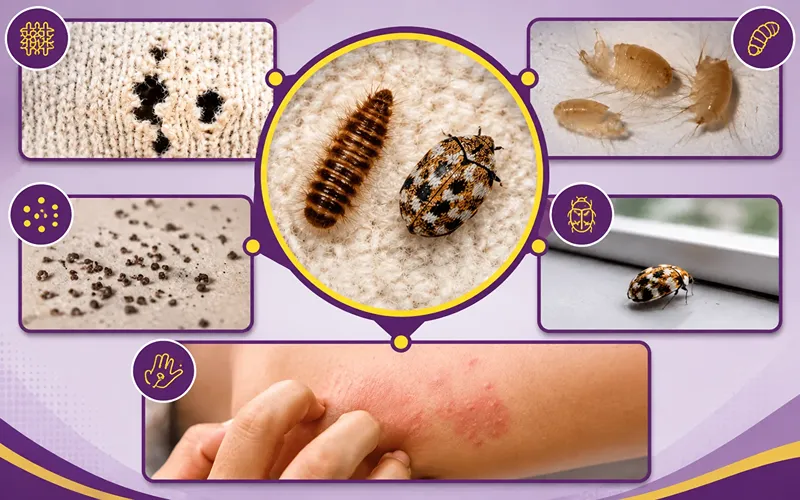
Before you can treat the problem, it helps to confirm what you’re actually dealing with. Look out for:
- Irregular holes in fabric: Clustered holes in wool sweaters, silk items, wall to wall carpets, or upholstery, often in hidden spots like the underside of rugs or inside drawers
- Shed larval skins: As larvae grow, they molt and leave behind small, hairy skin casings near their feeding sites
- Fecal pellets: Tiny, pepper-like droppings scattered near damaged fabric
- Live larvae or adults: Larvae are brown or black, elongated, and covered in bristly hairs; adults are often spotted near windows, since they’re drawn to light
- Skin irritation: Some people develop a mild, itchy rash known as carpet beetle dermatitis after prolonged contact with larval hairs, which is sometimes mistaken for a bed bug bite
If you’re unsure whether you’re looking at carpet beetles or something else, it’s worth noting the difference: bed bugs feed on blood and don’t fly, while carpet beetles feed on fibers and can fly as adults. Carpet moth larvae, meanwhile, are smooth and pale and tend to spin silky webbing, whereas carpet beetle larvae are fuzzy and don’t build webs.
What Attracts Carpet Beetles to Your Home
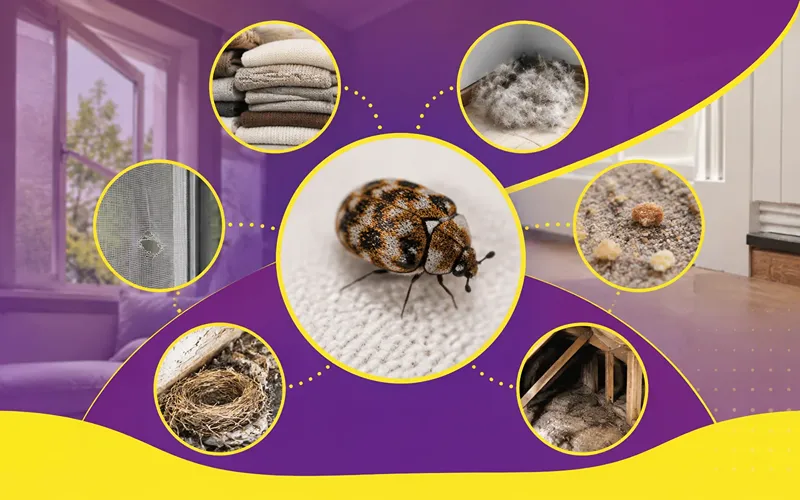
Carpet beetles typically enter through small gaps, open windows, torn screens, gaps under doors, or cracks in the foundation. They can also hitch a ride indoors on cut flowers, secondhand furniture, or even pet fur. Once inside, a few conditions make your home more inviting to them:
- Piles of natural-fiber clothing or linens left undisturbed for long periods
- Pet hair, dander, and lint accumulating in corners, vents, or under furniture
- Food residue or stains on fabric, which attracts larvae
- Dead insects or bird nests in attics, chimneys, or wall voids, which larvae can also feed on
How to Get Rid of Carpet Beetles: Step-by-Step
There’s no single treatment that clears out a sisal carpet beetle infestation overnight. Effective control usually comes down to combining a few methods and repeating them consistently, since you need to target eggs and larvae, not just the adults you can see.
1. Vacuum Thoroughly and Often
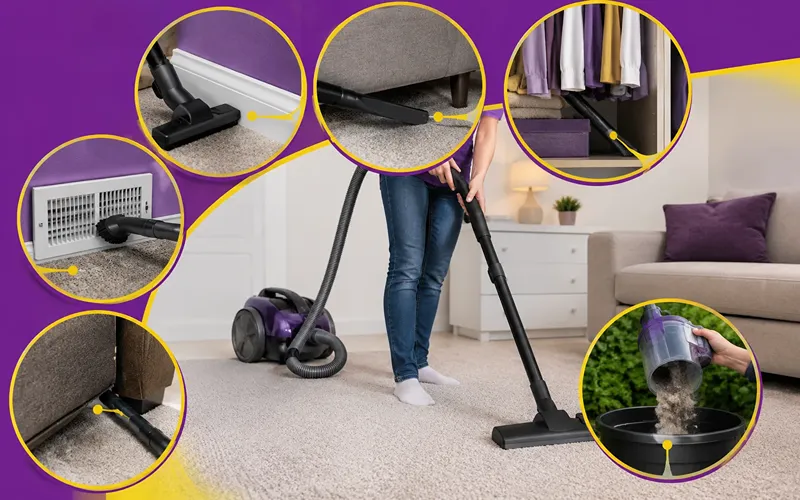
Start with a deep, thorough vacuuming session. Focus on carpet edges, baseboards, under furniture, inside closets, and any dark, undisturbed corners where larvae like to hide. Don’t forget air vents and behind heavy furniture, larvae often gather wherever dust and hair collect. Empty the vacuum bag or canister outside immediately afterward so you’re not just relocating the problem.
2. Wash or Dry Clean Infested Items

Hot water is one of the most reliable ways to kill carpet beetle eggs and larvae in clothing, bedding, and curtains. Wash affected items on the hottest setting the fabric can tolerate, and finish with a hot dryer cycle for extra assurance. For delicate items that can’t handle hot water, dry cleaning is just as effective at killing all life stages of the insect.
3. Freeze What You Can’t Wash
For items that can’t be laundered or dry cleaned, freezing is a solid alternative. Seal the item in a plastic bag to prevent moisture damage, then place it in a freezer set below 0°F for at least 48 to 72 hours. This kills eggs, larvae, and adults without exposing delicate fabrics to heat or chemicals.
4. Set Out Glue Traps
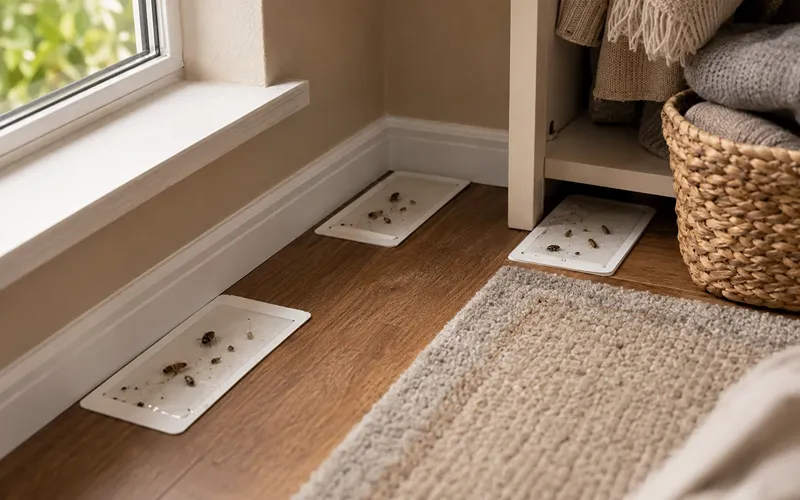
Glue traps won’t eliminate an infestation on their own, but they’re a useful diagnostic tool. Place them along baseboards, windowsills, and other areas where you’ve spotted activity to gauge how widespread the problem is. Check and replace them every couple of days, and use what you find to figure out where the larvae’s food source is hiding.
5. Try Natural Deterrents
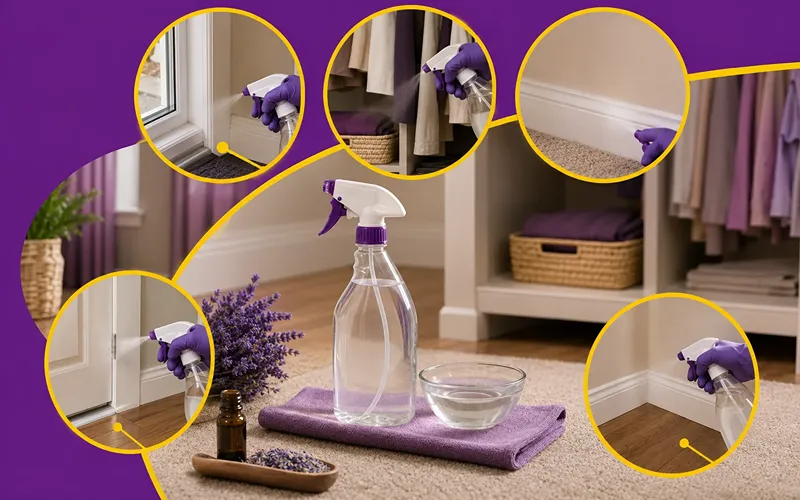
If you’d rather avoid chemicals, a simple 1:1 solution of white vinegar and water sprayed around entry points, closets, and baseboards can help deter beetles without harming fabrics. It’s not a substitute for cleaning and washing, but it’s a helpful addition to your routine, especially for households with pets or small children.
6. Use a Targeted Insecticide if Needed
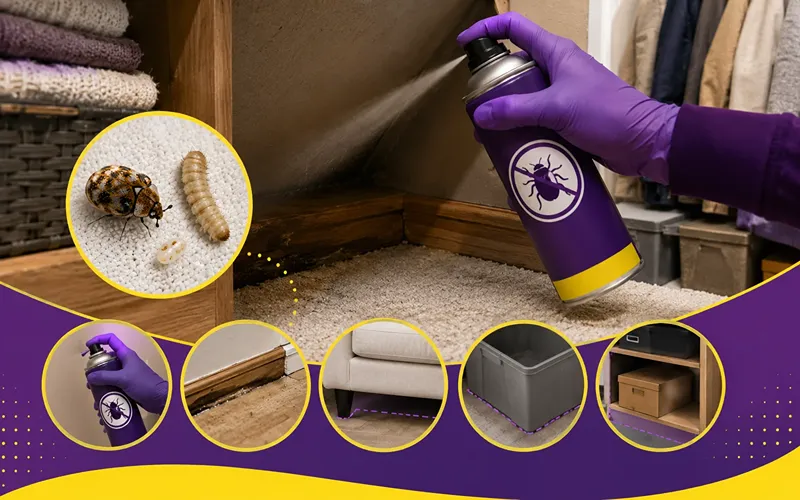
For persistent or larger infestations, a pesticide labeled specifically for carpet beetles can help knock down remaining populations. Always read the label carefully, apply it only to areas it’s approved for, and avoid spraying directly on fabrics unless the product specifies it’s safe to do so. Spot treatments work well for items that can’t be washed or frozen.
7. Call a Pest Control Professional
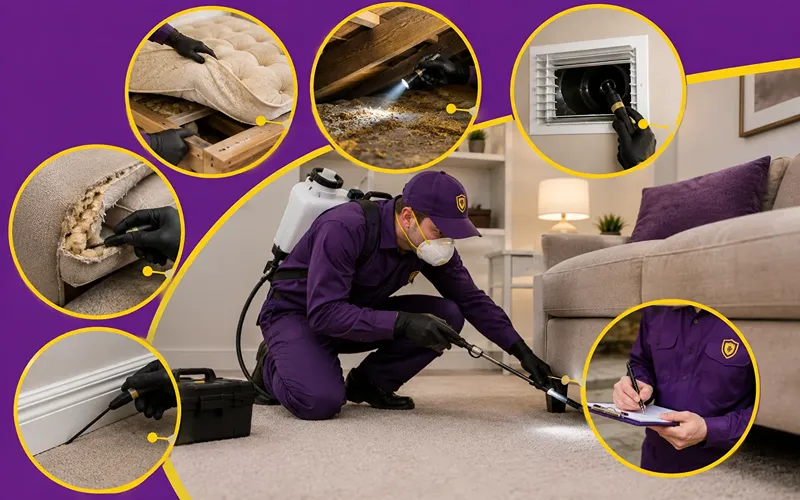
If you’ve tried the DIY route and the beetles keep coming back, or if the infestation has spread across multiple rooms, it’s worth bringing in a licensed exterminator. Established infestations can hide deep in furniture stuffing, wall voids, or air ducts, places a vacuum or spray simply can’t reach. A pest control expert can inspect these hidden areas and design a treatment plan suited to your home.
How to Prevent Carpet Beetles From Coming Back

Once you’ve cleared an infestation, a few ongoing habits will keep it from returning:
- Store natural-fiber clothing properly. Seal wool, fur, and silk items in airtight containers or garment bags, especially during off-seasons.
- Vacuum regularly. Weekly vacuuming of carpets, rugs, and upholstery keeps lint and pet hair from building up into a food source.
- Seal entry points. Check window screens for tears, add weather stripping to doors, and fill in any cracks around your foundation.
- Groom pets often. Regular brushing reduces the loose hair and dander that attracts larvae.
- Inspect stored items annually. Air out stored woolens and furs in the sun once a year, and check for early signs of damage before putting them away again.
- Keep an eye on cut flowers. Since adult beetles feed on pollen, give fresh flowers a quick shake outside before bringing them indoors.
Final Thoughts
Carpet beetles are a nuisance, not a health hazard, but the damage they cause to clothing, rugs, and furniture can add up quickly if the infestation isn’t caught early. The combination of thorough vacuuming, hot water washing, freezing, and sealing entry points handles most household infestations without needing anything more than a bit of patience. If the problem keeps resurfacing despite your best efforts, don’t hesitate to call in a pest control professional, some infestations really do need an expert’s help to fully clear out.
Frequently Asked Questions
Do carpet beetles bite humans?
No. Carpet beetles don’t bite, but their larval hairs can cause an itchy skin reaction in some people, known as carpet beetle dermatitis.
How long does a carpet beetle infestation last?
If left untreated, an infestation can drag on for months or even over a year, since the larval stage is long and eggs keep hatching in hidden spots. With consistent cleaning and treatment, though, most infestations clear up within a few weeks.
Can carpet beetles infest a mattress?
Yes, especially mattresses stuffed with natural materials like wool or feathers. Vacuuming seams thoroughly and using a protective mattress cover can help control this.
Are carpet beetles harder to get rid of than moths?
Both pests require similar treatment methods, cleaning, washing, and eliminating food sources, but carpet beetles tend to be more mobile as adults, which can make locating the source of an infestation a bit trickier.